Identifying Learning Disabilities

This week I corresponded with three individuals involved in the Special Education Process: a regular education teacher, a special education teacher, and a parent. They discussed with me the process of identifying learning disabilities.

The regular education teacher admitted she did not have as much information to share on this topic. The special education teacher provided the IDEA definition of learning disabilities, “A disorder in one or more of the basic psychological processes involved in understanding or in using language, spoken or written, that may manifest itself in an imperfect ability to listen, think, speak, read, write, spell, or to do mathematical calculations, including conditions such as perceptual disabilities, brain injury, minimal brain dysfunction, dyslexia, and developmental aphasia.”

The parent shared her experience of finding that her son was not performing well on school work and seemed frustrated, however, her son was bright and doing well with other development. She discussed this with the teacher, and they decided to proceed with a screening. This part included vision and hearing screenings, as well as some other tests. Eventually this led to a referral to specialist, which diagnosed her son as having a learning disability.

The special education teacher shared there are a variety of assessments that are used in diagnosing children with learning disabilities. These included ecological, portfolio, individualized intelligence tests, and individualized achievement tests. These tests reveal the child’s skill levels in reading, math, and written language. Most tests look at the children’s deviation from the norm, which can qualify the student for services when there is a variance between the child’s IQ level and their achievement levels.

Students go through a complex process to be diagnosed with learning disabilities. This process is full of tests and can only be started with parents and teachers working as a team to benefit the child’s education. Please let me know of your experiences:)
other health impairments

Physical Health Impairments

other health impairments

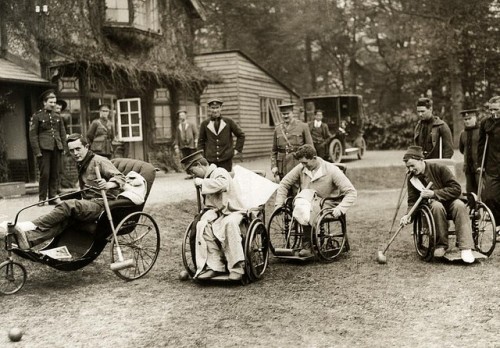
Physical health impairments, PHI, are another disability that might affect your family or those you know. To help me to understand the needs of those with PHI and in turn help me to be a better teacher and civilian, I wanted to do some personal research to what is more specifically entailed with those effected by PHI. The thing I found, in trying to better comprehend Physical Health Impairments, is that they effect individuals differently, so it is important to understand the individual’s history, needs, and desires. This means reading background information, consulting prior teachers/doctors/etc, and being ready to adapt new ideas to the classroom and home environments, so that the child can be included and prosper within the classroom as well as all areas of life. My experiences thus far with those with PHI have mostly been out in society and some in early intervention. I have found that I find it easiest to problem solve how to best help the individual by putting myself into their shoes. In early intervention, we primarily worked on exploring their home environments through textile play and promotion of using/building other muscles to promote overall movement, but as they grow older their needs evolve and can become more entailed. It is important to regularly revisit the goals for the individual and make sure that the goals are not only realistic but also true challenges that help broaden the child’s future. Because PHI is such a broad term, it is important to look at the individual and brainstorm their current challenges, future challenges, and the greatest way to minimize both of these. Here are some items to think about:

  • Accessibility- what in their daily life might be hard to access
  • Endless Possibilities- What are the dreams and hopes for this child
  • Friendships- Who are they going to bond with and enrich themselves socially with
  • Self-confidence- We could all use a little more and these kids especially need it
  • Living Life- In the end it is most important that everyone lives their lives to the fullest with no regrets so help push them to reach those high goals and be the best version of themselves

I would love to hear more about your personal experiences, so feel free to leave a comment

Best Internet Sites for Kids With Special Needs

The internet is a powerful tool full of everything you need to become aware of what is involved with a diagnosis and coming up with a game plan on how to work with your child to help them become the best version of themselves. Below is a list of the best internet sites for kids with special needs. Please share if you know of any good sites.

General Parental Resources:

Activity Sites:

Speech:

Autism:


Down Syndrome:

helping children

Identifing Proper Services for Those with Mental Retardation

When any child has health, behavioral, developmental, or learning issues, it becomes an issue for the family and their support group. Many professionals help families through these times. When children are diagnosed with Mental retardation, normally the primary care physician is the first professional families consult, as they commonly are the same professionals that identify and label the child with mental retardation (Drew, 2003).

As the family begins on the process of deciding what actions to take in order to best fit their child, it is important for them to understand the definitions of mental retardation, disciplines for helping those with mental retardation, and a greater understanding of the risk factors associated with mental retardation. It is important to find services for those with mental retardation.

helping children

As a child starts through the process of being identified as a person with mental retardation, they will often encounter assessments. There are two basic types of assessments: norm-referenced assessment and criterion-referenced assessment (Drew, 2003). The norm-reference scale is commonly used for diagnosis through things, like the IQ test. This kind of test is based on a comparison of the individual’s score and their deviation from a standard or normal score (Drew, 2003). A child that is found to have an IQ between fifty-five and seventy-one is considered to have Mild Mental Retardation . This normally means that the child will need minimal supports and can eventually have an independent lifestyle. A child who scores between forty and fifty-four on their IQ is considered to have Moderate Mental Retardation and is trainable but will need supervision for the rest of their lives. A child who scores between twenty-five and thirty-nine on their IQ is considered to have Severe Mental Retardation and will need extensive support but training may be possible. A child who scores below twenty-five on their IQ is considered to have Profound Mental Retardation and will likely not be trainable and need constant support throughout their life. Although these tests do give us an idea of where a child’s intelligence might be, the label does not fully encompass the child’s abilities. Our society is a label filled society, but parents and providers need to look at the bigger picture to see the uniqueness of the child.

Another way to assess the child is through evaluating the child’s abilities and needs without the focus on referencing the standardized norm. Often professionals use criterion-reference assessments for a child once they start therapies and school. These tests are used to determine the child’s present level of abilities by looking at what skills they have accomplished and what skills they should next accomplish. This often helps the professionals decide where to start helping the child with Mental Retardation toward achieving their next steps (Drew, 2003). It is also important to consider the limitations of the child, the strengths that the child has, if the child’s assessment considered cultural and linguistic diversity, what supports the child needs, and how these supports can help the child to succeed. A child can truly benefit from finding a program that is right for them according to their needs and abilities.

References

Drew, C. J., & Hardman, M. L. (2003). Mental retardation: A life cycle approach (8th ed.). Upper Saddle River, NJ: Merrill.

Special Needs Resources in Arizona

Below is a list of special needs resources available if you live in Arizona, however, no matter where you live there is probably similar services. Under US federal law there has to be an agency (per state) who can advocate for the family and help them navigate through the system. The agencies go under different names by state though so check with your local Division of Developmental Disabilities in order to find this resource.

Special Needs Resources in Arizona

Adult Protective Services Maricopa County (602) 255-0996
To report when an adult is being neglected, abused or exploited

AZ Association of Homes and Housing for the Aging (602) 230-0026
Provides resources and assistance to adults and elderly

AZ AARP State Office (602) 256-2277
Provides support and information to the elderly

D.E.S. Rehabilitation Services 4620 N. 16th St. #100, Phoenix 85016
Independent living services, orientation, and mobility instructions

D.E.S. Aging and Adult Administration (602) 542-4446
Provides resources and assistance to adults and elderly

Foundation for Senior Living Phoenix 602) 285-1800
Provide personal, flexible and individualized plan to protect individuals with disabilities

Interfaith Caregivers Program (602) 285-0543 x21
Provides free transportation for individuals with disabilities 18+

Learning Disabilities Association of Arizona (602) 246-6615
Service include resource center, speakers, increase community awareness, information, referral, and encouraging research

Lutheran Social Ministry of the Southwest (480) 325-4901
Provides personal, non-medical care, assistance, housekeeping, respite, and companionship

Tempe Meals on Wheels (480) 784-5630
Provides meals and snacks for homebound individuals for $14-20/wk

Phoenix Reserve-A-Ride (602) 262-4501
Provides free transportation for individuals with disabilities 18+ and adults 60+

Mayor’s Committee on Employment of People w/ Disabilities (480) 312-2477
Provides scholarships, awards and community awareness

Senior Help Line Maricopa Count (602) 264-HELP
A help line that answer questions give referrals, and provide resources for the elderly and those that support the elderly