Down Syndrome: A Bio by the Father of a Child Effected

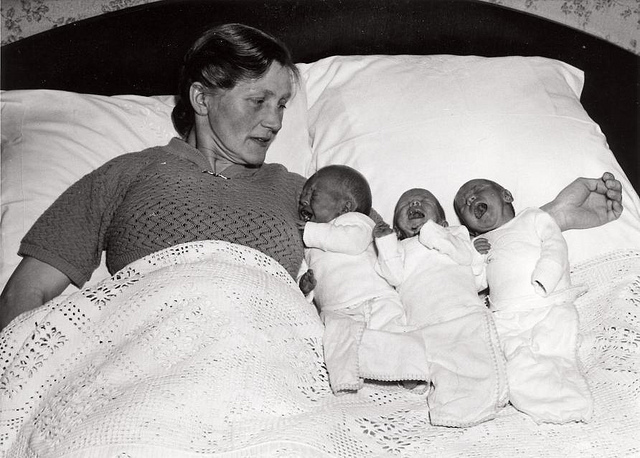
Down Syndrome effects 1 in every 691 births. It can range in severity, but the common symptoms are a delay in physical and intellectual development. Often individual’s effected have low muscle town, a flattened facial profile, a single crease across the palm, and an upward slant to the eyes. There can be heart, feeding, sight, and other issues involved. Down Syndrome is present when there are 47 chromosomes instead of the normal 46 a the chromosome effected is the 21st chromosome. It can be only a partial or a full copy of Chromosome 21. There are cases that they call ‘Mosaic’ where some of the areas of the individual are normal while others are not. There is no known reason for the disorder, but it occurs when there is an error in cell division.  The chances increase with age of the mother, but 80% of children born with down syndrome are under 35 years old.

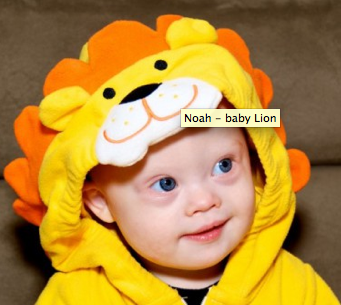
Here’s, Noah’s Dad, a great blog written by a dad that details the life of his child with down syndrome. Hope you can find it helpful

Learning Disabilities: Legislation and Litigation

Legislation and litigation play a huge roll in the lives of those with learning disabilities and those that work with them. By the definitions that the government provides, individuals with learning disabilities receive services that aide in their education. The following will reflect on legislation and litigation and its effects on special education today.
Two of the big laws that affect those with disabilities in the US are: Individuals with Disabilities Education Act, IDEA, and Americans with Disabilities Act, ADA. Learning disabilities are defined by IDEA as…

A disorder in one or more of the basic psychological processes involved in understanding or in using language, spoken or written, that may manifest itself in an imperfect ability to listen, think, speak, read, write, spell, or to do mathematical calculations, including conditions such as perceptual disabilities, brain injury, minimal brain dysfunction, dyslexia, and developmental aphasia (CEC).

This definition does not include those with motor disabilities, hearing/ vision impairments, emotional disturbance, mental retardation, or cultural/economic/ environmental disadvantages that may result in learning disabilities (CEC). The definition does include: dyslexia, minimal brain dysfunction, perpetual disabilities, brain injury, and developmental aphasia. It is important to note that the IDEA definition only applies to school-aged individuals, however, learning disabilities can occur at all ages since learning is an on-going process. With this in mind, those at LD Online, have materials date September 1992, which state ADA applies to those with disabilities into their adulthood. If this is correct, it means those with learning disabilities are entitled to have access to and be accommodated in employment, transportation, public accommodations, state and local government activities, and communication.

Those with learning disabilities have varying disabilities, which may affect them in different ways and to different extents. As an educator, parent, and professional, it is possible to help those with learning disabilities to compensate for the disability. Individuals with learning disabilities may perform differently considering their familiarity with the task, complexity of the task, the environment, access to assistive devices, and other external support.

References

LD Online. (2011).  From http://www.ldonline.org/

The Council for Exceptional Children. (n.d.). From http://www.cec.sped.org
Cerebral Palsy: What is It and What Can be Done to Help

There are many unknowns in the land of Cerebral Palsy, CP. What we do know that it is a disability of movement. It can effect a small region of the body like one hand to the whole body. It effects muscle tone, mobility, and motor skills. It normal occurs from an incident during or before birth but can occur up to three to five years of life. It happens when there is damage to the motor control centers of the developing brain. There is no cure but some therapy options can help. Depending on the region effected  treatment options may include: special equipment, therapy, surgery, and alternative medicines.

The first signs of it are often noticed in babies and toddlers by missing milestones such as sitting, crawling, walking, or using both hands with out preference. When Cerebral Palsy is not with another preexisting condition, warning signs can easily be missed. I know from the cases I have worked with if it was simply a mobility issue it was diagnosed closer to a year or after. The cases I have seen earlier diagnosed had shunts or coexisting other health impairments. Once a parent suspects and issue, they should go to their doctor right away to start on the process to receiving services and getting their child the help they need. I have seen cases where a child was diagnosed with Cerebral Palsy and as an adult no one would of guessed it. This does not mean your child will be completely cured, just that all hope is not lost. So follow up on therapy and equipment use, and push your child, there are great things they can overcome.

Cerebral Palsy can often coincide with other conditions. There can often be speech issues, mental retardation, pain, sleep disorders, seizures,  feeding issues, learning disabilities, toileting issues, and behavioral issue. This does not mean that if your child has CP that they will have these other issues; they are simply things to look out for so that they too can receive treatment right away.

For more information, check out:
PubMed

Problems While Testing Those With Mental Retardation

There are a variety of problems associated with assessing students with Mental Retardation, MR. It is most important to remember this population of students are individuals, and they must be evaluated as such. Each child has her/his own strengths and weaknesses. A teacher may also need to consider that there are other possible handicaps that may interfere and require additional supports. Some other disabilities that may coincide with intellectual disabilities include: visually impairment, emotionally disturbed, speech and language impairment, hearing impairment, traumatic brain injury, orthopedic impairment, and/or Autism. It is also very important to take note of any medications the child is on, as they may interfere with the child’s testing abilities. A child’s race, sex, primary language, and ethnic background need to be considered as these to could affect the testing. When assessing a child, a statement needs to be written indicating their handicapping condition is not a result of economic, environmental, or educational disadvantage.

When testing, it is important to remember?

Tests using Standard Scores must be used to qualify a child for special education. The following represents the use of Standard Scores as the rating scale, which qualifies a student for Mental Retardation.

Standard Scores:

  • Severe: 62 or below (55 or below for Preschool Sever Delay)
  • Moderate: 77 to 63
  • Mild: 85 to 78 (or 1 ½ standard deviations on one area)

According to the Arizona Academic Standards, assessments resulting in age equivalents and grades are to be reported as the following levels: (Ages – Grades)

  • Pre-Academic Functional Level:  3 – 4 Preschool
  • Readiness Level:  5 – 6 Kindergarten
  • Essentials Level:  7 – 9 1st – 3rd Grade
  • Foundations Level:  10 – 14 4th – 8th Grade

The characteristics of children with Mental Retardation that result in eligibility for special education include personal abilities like washing their face, domestic abilities like making their own bed, and community abilities like obeying traffic lights language. A child with an intellectual disability needs to learn these abilities, and by having extra help in special education classrooms, they have the chance to take time to learn the skill. Some other skills they may need to acquire include: Interpersonal relationships skills like imitates simple adult movements, play and leisure skills like using common household objects for play, and/or coping skills like saying “please” when asking for things. A special education classroom provides the added structure to support a student with Mental Retardation to learn basic skills at a slower pace and focus on their specific goals.It is important to remember that each student’s needs are defining by the individual and not the disability.

For more information, check out this related article:

Intellectual Disability and Different Intelligences

Behavior Modification Plan and How to Make Them Work

The following is an example of a behavior modification plan. It is essential when working with a child with an emotional disability to come up with a game plan to help them succeed and meet their goals. This specific behavior modification plan is based on attendance, but behavior modification plans can be created around anything from raising their hand to be called on to not running away during school hours. The same ideas can be used at home to create success in family life. Just be creative and think of what the specific child’s needs and interests are so that the behavior modification plan is applicable to them. It is essential to be consistent with the behavior modification plan for the first week to month and then as the child becomes more successful they can be weaned from the plan back to normal daily life.

Sample Behavior Modification Plan

Target Behavior

Classroom Attendance: This is important to ensure the child is receiving a full education, where the child is learning responsibility as well as their curricular goals.

  • Appropriate behavior, regular attendance, to be increased
  • Inappropriate behavior, irregular absence and extreme tardiness, to be decreased

Classroom attendance to improve, so that child is missing only one day a month or less; only when child is sick or needs to attend pertinent appointments. Absence to be parental approved with call to school.  This will help the child to learn appropriate material and build consistent interactions with classmates.

Reinforcement

  • Attendance to class will be rewarded with token daily, which will help child earn larger reward.
  • Daily reinforces can help children see accomplishment, while larger prize helps them to see importance of consistency.
  • Child will receive token daily after sitting through, completing, class.
  • Final prize can be gauged by child’s interest and should be largely rewarding to them.

Data Collection

  • Attendance will be taken daily and noted in teacher’s log.
  • This log can be used to determine progress.
  • Child should start attending more regularly and continue their positive behavior over two months time.
  • Child will be observed over two months time with evaluations weekly on progress toward goal.