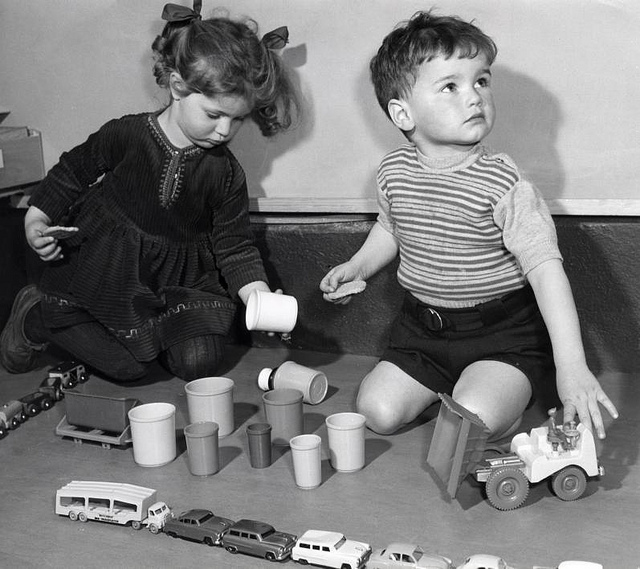
child learning

Helping those with Learning Disabilities Find Success

In order to help those with learning disabilities to find more success with academics and social-emotional skills, it is important to support their needs. Some possible ideas that may help include extrinsic motivation, rewards, intrinsic motivation, and grading (Smith, 2004). Extrinsic motivation is used when teachers and parents use enthusiasm to convey to children that they can and will succeed (Smith, 2004). It is important to use these when children really will succeed, so that the children will find reward in their work and be willing to try for success next time. Rewards can include verbal praise or alternative benefits to the child (Smith, 2004). It is important to remember when using reward that the child’s main focus should be the task and not the award, so that they do not become dependent on a reward. Intrinsic motivation is keeping the child task oriented and with internal motivation (Smith, 2004). The best way to convey intrinsic motivation is by displaying one’s own hard work for success to others. Children normally find this motivation from their own families. Grading is used in most cases to motivate children to work hard, but this system can be very defeating to those with Learning Disabilities. They may find more support from group projects, portfolios, narrative evaluations, and personalized grading that does not put them in direct competition with their peers, which they cannot beat (Smith, 2004).
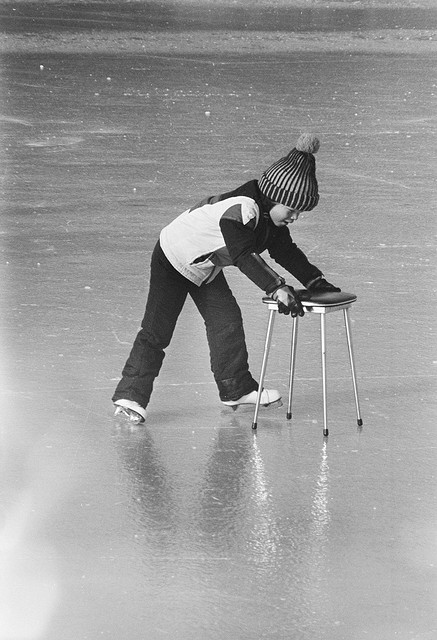
child learning

Students need many tools in order to find academic success whether they have learning disabilities or not. It is important to personalize their supports and remember that those with learning disabilities may need more help to find success than their peers. This does not mean that they are limited, just that they are more challenged in finding success.

Reference

Smith, C.R., (2004). Learning Disabilities: The Interaction of Students and Their Environments (5th ed.). New York: Pearson Education, Inc.

 

intellegence

Intellectual Disability and Different Intellegences

The following reviews the meanings of intelligence, as well as, how this applies to those with an intellectual disability, and the characteristics of those with intellectual disabilities that results in their eligibility for special education.

intellegence

The definitions of intelligence included the wide array of possible categories of intelligence. The categories could include: book, social, problem solving, abstract, imaginary, mathematical, scientific, spiritual, plus many more. According to dictionaries, intelligence can be defined as being informed, understanding, and obtaining knowledge or being knowledgeable. The early warning signs of Mental Retardation (Intellectual Disabilities) can include the inability to obtain and retain knowledge resulting in a child that has developmental delays. In other words, a parent may notice their child is not talking, walking, ect on the same time line as their peers. Depending on the severity and acuteness of the parent, the child may be diagnosed  at a different stage in development.

The next step, if you suspect an intellectual disability, is to get the child tested. Tests using Standard Scores must be used to qualify a child for special education and special services. The following represents the use of Standard Scores as the rating scale, which qualifies a student for MR or having an intellectual disability. The numbers are taken from IQ tests with a standard or average score of 100

Diagnosis: Standard Scores

Severe Mental Retardation: 62 or below (Preschool Severe Delay is below 56)
Moderate Mental Retardation: 77 to 63
Mild Mental Retardation: 85 to 78 (or 1 ½ standard deviations on one area)

Different diagnosis and different children have different needs for treatment and schooling. It is important to remember how much brain development is occurring in the first three years of life and seek help as soon as a problem is suspected. Ask the your child’s school psychologist for more information or look for a Developmental Pediatrician in your area.

Play Therapy and Drama Therapy: Learning at Play

Children with social and emotional behavioral issues often need interventions to succeed in the classroom. Some of the possible interventions include play and drama. Play therapy is based on the idea of letting children work through their problems in a technique they already feel comfortable with and use regularly, play (Newcomer, 2003). Drama therapy is a technique that uses both verbal and nonverbal communication, while children act out specific scenes from their lives (Newcomer, 2003).

Play Therapy

The strategy play therapy can be used with 3 to 12 year olds to help them coop with a traumatic issue and/or work through their problems. This technique can be beneficial to children who have issues socially connecting due to a disability or behavior.

Teachers can serve as a mediator between the students and their environment. The teacher will provide a variety of tools and make them available to the children. These tools can incorporate and help lead play therapy. The teachers will also make sure that the materials are developmentally appropriate. It is the teachers responsibility to provide time for play so that they can connect with the child and see them in a non-typical classroom like setting.

Play therapy should help children to develop more problem-solving skills, communication skills, and social skills. Teachers should make clear goals about play therapy, so they will know when it is being effective.

Drama Therapy

Drama Therapy is used to solve problems, explore unhealthy interactions, and help children emotionally cleanse themselves by acting out real life scenes.

Teachers can start with a warm up, to loosen children up and get the ready for bigger acting. This can include finger plays, songs, or simple improvisations. The lesson can include a wide range of games, like role0playing, mime, puppetry, improvisation, and theatrical. Teachers can conclude the session by helping students become aware of their attitudes and behaviors by asking “what” questions.

Teachers should set clear goals, so that it will be noted if the drama therapy is effective. An example of goals include: Explore Individual problems, teach social skills, teach coping skills, explore common problems associated with age group, conduct role training, explore social and cultural issues.

References

Newcomer, P. L. (2003). Understanding and teaching emotionally disturbed children and adolescents (3rd ed.). Austin, TX: Pro-ed.

Meeting the Needs of Those with Learning Disabilities

As a parent, it can be difficult to learn of your child’s learning disability. Meeting the needs of those with learning disabilities can be done with an individualized plan. A basic definition of a learning disability is an impairment that affects the way a child learns and can make it more difficult for them to reach age typical goals. There are a variety of different strategies and techniques that can be used to help a child with a learning disability achieve their educational goals.

Learning Disabilities

An important place to start is with educating yourself is with your local school district on their policies, procedures, and programs available for your child. A child’s eligibility to Special education services is not to be identified by one limited test. Arizona implements the right for all children to have a free appropriate public education, FAPE. It is part of Arizona specified process to identify, locate, and evaluate all students with disabilities. This means, whether the child is at a private or public school, teachers need to be aware of their students needs. The child’s IEP, individual education plan, team, which includes family and professionals, should decide the child’s need for special education and for other available services. Children are also to be re-evaluated, every three years, throughout their educational process. These assessments will be followed with evaluation reports that summarize the child’s current level of development. Children are to be assessed by tests that are none prejudice and not bias to any group/demographic of people. According to Arizona Department of Education’s website, http://www.ade.az.gov,

“For a child suspected of having a specific learning disability, the documentation of the team’s determination of eligibility will include: whether the child has a specific learning disability; the basis for making the determination; the relevant behavior noted during the observation of the child; the relationship of that behavior to the child’s academic functioning; the educationally relevant medical findings, if any; whether there is severe discrepancy between achievement and ability that is not correctable without special education and related services; the determination of the team concerning the effects of environment, cultural or economic disadvantage; and each team member will certify in writing whether the report reflects his/her conclusion. If it does not reflect his/her conclusion, the team member must submit a separate statement presenting his or her conclusion.”

Each individual school district has separate programs. Many start for children at the age of three. Most often these programs are great for children with language impairments and other early-diagnosed disabilities. In many special education classes, speech therapist are available to aid in directing educational activities to include components aimed at increasing language skills. Speech therapists may also be available for one-on-one consultation with children. There are also resource teachers available in most schools for more of a tutoring program to assist children in specific areas/subjects that they need more help with during their education. As a parent, it is important to ask your specific school what they offer, so that your child can get the best education for them to succeed to their full potential.

With learning disabilities, there are lots of questions for parents to find the answers to. There is information on the web, in libraries, and available through government and school programs. Take advantage of these resources so that your child can maximize their education experience.

baby

Development of Children with Mental Retardation

The development of children with mental retardation can sometimes look different than their typically developing peer. It is important to look at the whole child, their physical, language, cognitive, and psychosocial development. Once a child is identified, there are professional and parental interventions that can be put in place to help the child reach their full potential.

baby

Physical Development

  • Children develop at a rapid rate, while both as a fetus and as a newborn.
  • Physical development encompasses renal, endocrine, skeletal, gastrointestinal, reproductive, muscular, and neurological systems
  • At age 2, a child’s brain is 90% the size of an adults

Signs of Abnormal Physical Development

  • If a child’s head is abnormally large or small
  • Lack or absence of some reflexes
  • Abnormal weight or height
  • Inability/delay to perform typical motor developmental milestones

Language Development

  • Birth: Crying and sucking noises
  • 1-2 months: Cooing, rhythmic crying
  • 3-6 months: Babbling
  • 9-14 months: Speaking first words
  • 18-24 months: Speaking first sentences
  • 3-4 years: Using all basic syntactical structures
  • 4-8 years: Articulating correctly all speech sounds in context

 Signs of Abnormal Language Development

While keeping in mind the above development timeline, it is important to consider the way your child speaks.  Consider the number of words in their vocabulary, how they  pronounces the words, and the way they create sentences

Cognitive Development

  • 2-4 months: Inspects own hands, begins to play with rattle
  • 6-10 months: Plays peek-a-boo, slides toy on surface
  • 15-18 months: Brings object from other room on request
  • 22-24 months: Identifies 6 body parts, matches sounds to animals
  • 30-36 months: Plays house, completes 3-4 piece puzzle, understands all common verbs

Signs of Abnormal Cognitive Development

If a child appear uninterested in manipulation, has delays in other areas, or has issues with sensory environment, cognitive development could be delayed.

Psychosocial Development

  • Smiling starting at 4 to 5 months spontaneously, 6 to 10 months into a mirror
  • 3-6 months follows moving people; 7 to 10 months discriminates stranger; 11 to 24 months waves good-bye
  • 8 to 10 months holds own bottle

Signs of Abnormal Psychosocial Development

  • Extreme temper tantrums that do not seem to be linked to triggers
  • Extreme shyness or withdrawal
  • Lack of fear in high danger situations can be signs of abnormal psychosocial development

Now what?…

These measures of development may happen slightly before or after the suggested time frame as each child develops at there own rate.  If you have a concern for your child, talk to your child’s doctor about them.