child learning

Helping those with Learning Disabilities Find Success

In order to help those with learning disabilities to find more success with academics and social-emotional skills, it is important to support their needs. Some possible ideas that may help include extrinsic motivation, rewards, intrinsic motivation, and grading (Smith, 2004). Extrinsic motivation is used when teachers and parents use enthusiasm to convey to children that they can and will succeed (Smith, 2004). It is important to use these when children really will succeed, so that the children will find reward in their work and be willing to try for success next time. Rewards can include verbal praise or alternative benefits to the child (Smith, 2004). It is important to remember when using reward that the child’s main focus should be the task and not the award, so that they do not become dependent on a reward. Intrinsic motivation is keeping the child task oriented and with internal motivation (Smith, 2004). The best way to convey intrinsic motivation is by displaying one’s own hard work for success to others. Children normally find this motivation from their own families. Grading is used in most cases to motivate children to work hard, but this system can be very defeating to those with Learning Disabilities. They may find more support from group projects, portfolios, narrative evaluations, and personalized grading that does not put them in direct competition with their peers, which they cannot beat (Smith, 2004).
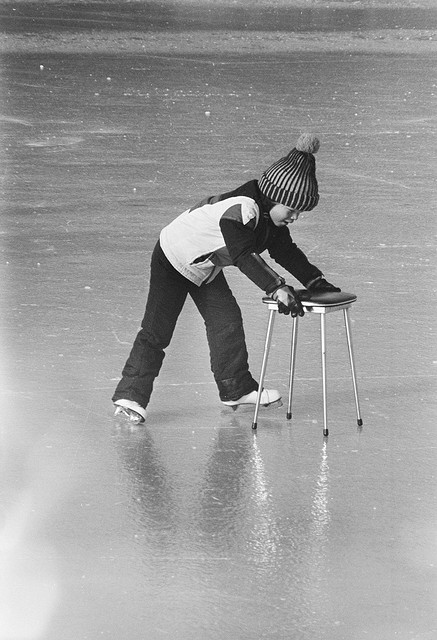
child learning

Students need many tools in order to find academic success whether they have learning disabilities or not. It is important to personalize their supports and remember that those with learning disabilities may need more help to find success than their peers. This does not mean that they are limited, just that they are more challenged in finding success.

Reference

Smith, C.R., (2004). Learning Disabilities: The Interaction of Students and Their Environments (5th ed.). New York: Pearson Education, Inc.
 

intellegence

Intellectual Disability and Different Intellegences

The following reviews the meanings of intelligence, as well as, how this applies to those with an intellectual disability, and the characteristics of those with intellectual disabilities that results in their eligibility for special education.

intellegence

The definitions of intelligence included the wide array of possible categories of intelligence. The categories could include: book, social, problem solving, abstract, imaginary, mathematical, scientific, spiritual, plus many more. According to dictionaries, intelligence can be defined as being informed, understanding, and obtaining knowledge or being knowledgeable. The early warning signs of Mental Retardation (Intellectual Disabilities) can include the inability to obtain and retain knowledge resulting in a child that has developmental delays. In other words, a parent may notice their child is not talking, walking, ect on the same time line as their peers. Depending on the severity and acuteness of the parent, the child may be diagnosed  at a different stage in development.

The next step, if you suspect an intellectual disability, is to get the child tested. Tests using Standard Scores must be used to qualify a child for special education and special services. The following represents the use of Standard Scores as the rating scale, which qualifies a student for MR or having an intellectual disability. The numbers are taken from IQ tests with a standard or average score of 100

Diagnosis: Standard Scores

Severe Mental Retardation: 62 or below (Preschool Severe Delay is below 56)
Moderate Mental Retardation: 77 to 63
Mild Mental Retardation: 85 to 78 (or 1 ½ standard deviations on one area)

Different diagnosis and different children have different needs for treatment and schooling. It is important to remember how much brain development is occurring in the first three years of life and seek help as soon as a problem is suspected. Ask the your child’s school psychologist for more information or look for a Developmental Pediatrician in your area.

learning together

Should My Child be Talking? Could My Child Have a Speech Delay?

It is important to be proactive if you worry your child may have a speech delay. Some easy ideas to work on speech with your child may be to make sure that they are not using a bottle for an over extended period or using a pacifier into the toddler years. A child should give up the bottle by age 10 to 18 months. Most speech therapists suggest drinking through straws to help children to strengthen their mouth muscles. They can also practice blowing bubbles or windmills. Speech can be learned through reading, games, and songs. Interact with your child as a positive role model of what speech should sound like but do it in a friendly, inviting way so that your child wants to be involved.

Child Talking

If your child still seems behind, bring it up to your doctor, the early intervention starts the better the results. Speech can be a sign of other issues like learning disabilities or mental retardation, but it is not necessarily what is going on with your child. It is best to address the problems as they arise, so if right now it only seems like speech is the issues, just address the speech.

More on this topic:

How to Help with Language Delays

Is My Child Different

Play Therapy and Drama Therapy: Learning at Play

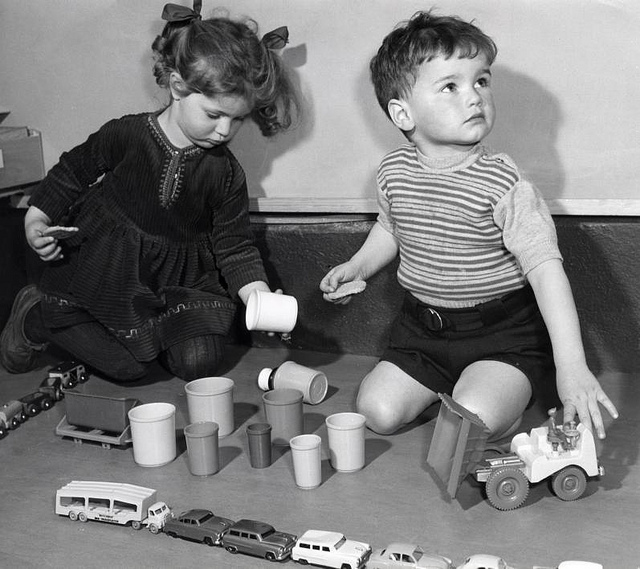
Children with social and emotional behavioral issues often need interventions to succeed in the classroom. Some of the possible interventions include play and drama. Play therapy is based on the idea of letting children work through their problems in a technique they already feel comfortable with and use regularly, play (Newcomer, 2003). Drama therapy is a technique that uses both verbal and nonverbal communication, while children act out specific scenes from their lives (Newcomer, 2003).

Play Therapy

The strategy play therapy can be used with 3 to 12 year olds to help them coop with a traumatic issue and/or work through their problems. This technique can be beneficial to children who have issues socially connecting due to a disability or behavior.

Teachers can serve as a mediator between the students and their environment. The teacher will provide a variety of tools and make them available to the children. These tools can incorporate and help lead play therapy. The teachers will also make sure that the materials are developmentally appropriate. It is the teachers responsibility to provide time for play so that they can connect with the child and see them in a non-typical classroom like setting.

Play therapy should help children to develop more problem-solving skills, communication skills, and social skills. Teachers should make clear goals about play therapy, so they will know when it is being effective.

Drama Therapy

Drama Therapy is used to solve problems, explore unhealthy interactions, and help children emotionally cleanse themselves by acting out real life scenes.

Teachers can start with a warm up, to loosen children up and get the ready for bigger acting. This can include finger plays, songs, or simple improvisations. The lesson can include a wide range of games, like role0playing, mime, puppetry, improvisation, and theatrical. Teachers can conclude the session by helping students become aware of their attitudes and behaviors by asking “what” questions.

Teachers should set clear goals, so that it will be noted if the drama therapy is effective. An example of goals include: Explore Individual problems, teach social skills, teach coping skills, explore common problems associated with age group, conduct role training, explore social and cultural issues.

References

Newcomer, P. L. (2003). Understanding and teaching emotionally disturbed children and adolescents (3rd ed.). Austin, TX: Pro-ed.

Special Education Teachers: Job and Responsibilities

Special education teachers use various techniques to promote learning. Depending on the disability, teaching methods can include individualized instruction, problem-solving assignments, and small-group work. When students need special accommodations in order to take a test, special education teachers see that appropriate ones are provided, such as having the questions read orally or lengthening the time allowed to take the test.

Special education teachers help to develop an Individualized Education Program (IEP) for each special education student. The IEP sets personalized goals for each student and is tailored to the student’s individual needs and ability. When appropriate, the program includes a transition plan outlining specific steps to prepare students with disabilities for middle school or high school or, in the case of older students, a job or post secondary study. Teachers review the Individualized Education Program with the student’s parents, school administrators, the student’s general education teacher, and any others who are an essential part of the student’s development. It is essential that the special education teacher listens to the group as a whole and the the IEP is truly a group collaborative agreement. Teachers work closely with parents to inform them of their child’s progress and suggest techniques to promote learning at home.

Special education teachers design and teach appropriate curriculum, assign work geared toward each student’s needs and abilities, and grade papers and homework assignments. They are involved in the students’ behavioral, social, and academic development. They help the students develop emotionally, feel comfortable in social situations, and develop awareness of socially acceptable behavior. Preparing special education students for daily life after graduation also is an important aspect of the job. Teachers provide students with career counseling or help them learn routine skills, such as balancing a checkbook.

There are many aspects to the jobs within special education, but the heart of the job is helping students reach their full potential. They can help children to succeed and help parents along the education journey.