word recognition

Word Recognition: A Guide to Help Children Read

The following is a curriculum guide for teaching word recognition. It can be used by both parents and professionals to help children who are struggling to learn to read find success.

word recognition

As children with language delays, or other disabilities, approach reading, they often find similar difficulties in achieving success. There are a variety of researched methods for teaching children written language one of which is word recognition. One teacher stated “Students with reading-related learning disabilities must have intensive instruction in word recognition to develop into successful readers” (Wanzek & Haager, pp.32, 2003). Word recognition is a process teachers use to help their students become successful with reading.

The Process of Word Recognition

Just like in other areas of academics, students should be taught to their developmental level and not just to their age appropriate level. Word recognition skills are taught on a continuum, where readers work on achieving skills in the process of:

1. Letter-Sound Knowledge

2. Letter-Sound Blending

3. Onset-Rime/Word-Family Instruction

Key Factors in Word Recognition

While teaching word recognition, here are some important factors for teachers to remember:

  • 84% of words in the English language have regular, consistent spelling patterns and only 3% are considered highly irregular
  • Help students attack words piece by piece, so they are not overwhelmed by the word or phrase in front of them
  • It is best to guide and model reading for students than to tell them because the student is often already stressed by the task in front of them, so keeping the environment as friendly as possible helps things run smoother
  • Do not let the student struggle too long or they will give up on the task at hand
  • Ask the student if the word makes sense in the sentence the way they pronounced it. This helps the student’s awareness and practical thinking
  • Use pictures to help relate what the text is trying to say, for example a picture can help the student to realize the noun is ‘bee’ instead of ‘bed’
  • Children can read the letter chunks they are familiar with like “at” and the teacher can help blend in other sounds to make new words “cat,” “bat,” “rat”
  • Help the child break down larger words into shorter syllable patterns. This can help to simplify text
  • Ask the child if they know a word that looks like the new word. This can promote self-help skills when new unfamiliar words come up

The tools listed above for both verbal skills and word recognition can be used as part of an on-going process to promote successful, competent students that become successful, independent adults.

References

Learning Pages. Word Recognition.

Wanzek, Jeanne and Diane Haager. (2003). Teaching Word Recognition with Blending and Analogizing.


intellectual disabilities

Intellectual Disability: Social and Ethical Decisions

Being diagnosed with an Intellectual Disability poses a series of questions and struggles. The following takes you through the beginning life phases and the choices parents face while raising a child diagnosed with an intellectual disability.

intellectual disabilities

Prenatal Period

In the prenatal period, it is important that parents are encouraged to do those preventive measures that are least invasive to the baby.  For example, through informational hand outs and possible financial assistance, parents can receive information on proper ways to care for themselves and their baby.  Some of the topics would include prenatal care and the importance of not drinking alcohol, excessive caffeine, doing drugs, or smoking cigarettes. If parents or the fetus are at risk, there are medical procedures that can test the child for disabilities.  Often these tests include a risk for miscarriage.  Parents must face whether they think that it is worth this risk.  If they do decide to go this extra step and find that their child does have a disability, they must face deciding on abortion, adoption, or keeping the child.

Early Years

Early years, includes children 0-5 years old.  Often this is the time that the family is adjusting to having a child with an intellectual disability.  It can be full of troubling issues as the parents coup with their child’s diagnosis and perhaps the chance that their child will not live a long life.  After the child is born, the parent can choose not to use radical measures to prolong the child’s life and thus deal have to deal with the death of their child.  As well as this decision, there are also many more, which include is the child and family life Teaching Standard meets Exceptional Needs Standards, three children with exceptional needs, Interactions with children, Engage students in communication and literacy, Engage Students in Social Development, use of assessment, and Out of Classroom Collaboration or will the child have to be institutionalized.  There are also questions about services, and the adult put into the decision making position for the individual with an intellectual disability may need to learn how to advocate for their child.

School Years

There are many things for family to face. The parent must decide at the school level what program they want their child in.  Are they going to go to a private specialized school?  Are they going to integrate to peer’s without disabilities programs? Or are they going to go to the public school, but still be separated?  With the parents facing so many questions, they may seek assistance from teachers and/or try to find comfort in their decision from the teachers.  As a teacher, it is important to respect the parents decision.  Then throughout the educational process parents and individuals face more decisions with goals and their educational program.

Adulthood

Parents face many decisions when their child with an intellectual disability reaches adulthood.  They may have to stop and ask themselves, if their child is ready? Do they have the skills to take on the responsibility of adulthood?  Where will they live? Will they work? If so, where?  How will they receive the support necessary to live a fulfilling and safe adulthood?  These questions may lead the parent to feeling overly protective and/or all alone.  As a teacher, it is important to provide support for families as they go through this transition.  It is also important to give a realistic evaluation of the child and direct the family to the appropriate services.

Summary

  • Parents face many options when they have a child with an intellectual disability
  • Everyone involved needs appropriate information
  • Families need to find a place of support while making decisions and raising a child with an intellectual disability

Other Resources


traumatic brain injury

Traumatic Brain Injury: A Simple Breakdown

A Traumatic brain injury, or TBI, includes a wide range of injuries with a broad spectrum of symptoms and possible disabilities. Many times the wider range impacts cannot be noted until later on if the accident occurs when the child is very small. The following are some basic facts about a Traumatic Brain Injury:

traumatic brain injury

Definitions

An injury that is caused by an external physical force, which leads to an impairment in one or more areas of functioning and can cause delays/ difficulty with educational performance.

Causes

There are both open and closed head injuries. Open are caused by penetration of an object to the head, and closed are when a blunt stationary object hits the head resulting in the brain slamming into the cranium.

Characteristics

There is a wide range of characteristics, which may be permanent or temporary. They include:

  1. physical and sensory change
  2. cognitive impairments
  3. social, behavioral, and emotional problems

Education

As each injury is different, so are the impacts and the child’s needs. It is important as an educator to truly understand each individual child, so that the child can truly benefit from their education by having an environment that catered to them. This also means being aware of any challenges the child seems to be having learning or manipulating their environment to meet their needs.

Parenting

Again each case is so individual. Listen to the doctors and your own heart. If something doesn’t seem right, pursue it. You are your child’s most important advocate. This means to educate yourself on your individual child’s needs and follow your intuition on what needs you see so that your child can get any additional help needed. This may range from physical therapy, speech, therapy, occupational therapy to help in academics.

Other Resources

Here’s a great spot on CNN about Children and Severe Traumatic Brain Injury

Stress and Children

Stress and Children: The Lifelong Relationship

Stress and Children

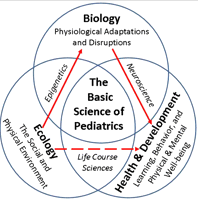
I recently read an interesting article from American Academy of Pediatrics on how stress in early childhood contributes to a life of health problems. Many of us are aware of this correlation, but the article is about how it is more than a simple correlation. Instead there are lasting effects that effects the actual make up of the brain. Early experiences can influence emerging brain architecture and as a result long-term health.

stress and children

Long-term effects of childhood adversity can include, poorer:

  • Academic achievement
  • Economic productivity
  • Health Status
  • Chances of dealing with stress later on in life

Although a child going through unhealthy stress is not a rat, consider this. There was a study on rats: mother’s who licked and cared for there newborn produced babies that had less exaggerated stress as adults. Compared to rats who did not care for their infants so religiously who had pups who then in-turn passed on this skill to their babies. These less cared for baby mice had worse skills for dealing with stress.

Stress and Children

The health status of children from stressful situations where they do not have a responsive caregiver can give different physiological effects which create:

  • the “wear and tear” effect on multiple organs, including the brain
  • a change in neuronal architecture which changes learning, memory, and executive functioning in the brain
  • impaired memory and mood control
  • more anxiety
  • hyperactivity
  • Problems in development of linguistics, cognitive, and social-emotional skills
  • Difficulty distinguishing between conditions of safety and danger

Literally a child’s early environment get under their skin and change the very make up of the child. The relationship between stress and children can create many poor outcomes. Helping a child get through it can make all difference. This means creating the safe environment to know that the adult is there and will help them through life’s unexpected difficulties.

Stuttering

Stuttering and How the Brain Functions

Stuttering is something that affects roughly 5% of children and usual roots itself from about 2-4 years of age. It tends to be a genetic trait that according to new research found in Cortex affects more than just speech. Speech is the most predominate part, however, so it’s what others notice.

Stuttering often starts with the consonants K, G, and T be repeated and may lead to other sounds. Less than 1% of children continue to experience stuttering into adulthood. It is often worsen when stressed by other factors such as crowds. The individual may suffer other facial twitches as well.

Stuttering

The newer research suggests how stuttering emerges from a brain structuring way, so if you think this problem might be effecting your child talk to your doctor right away. As with most developmental things, the sooner the diagnosis the better the outcome.

According to lead author Martin Sommer, a neuroscientist at the University of Göttingen in Germany,the results suggest that the left-hemisphere defect underlying a stutter causes trouble with sensory integra­tion in general, rather than specifically speech-related problems as was his­torically thought. “Like in stroke pa­tients, the right side seems to jump in and compensate,” Sommer ex­plains. But that part of the brain did not evolve to handle those tasks, so problems—such as a stutter—can emerge.            – Scientific American


A speech Pathologist can diagnosis and treat the symptoms.