learning together

Should My Child be Talking? Could My Child Have a Speech Delay?

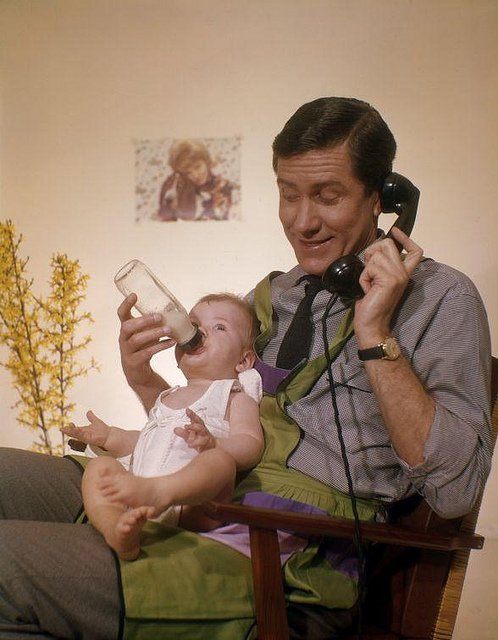
It is important to be proactive if you worry your child may have a speech delay. Some easy ideas to work on speech with your child may be to make sure that they are not using a bottle for an over extended period or using a pacifier into the toddler years. A child should give up the bottle by age 10 to 18 months. Most speech therapists suggest drinking through straws to help children to strengthen their mouth muscles. They can also practice blowing bubbles or windmills. Speech can be learned through reading, games, and songs. Interact with your child as a positive role model of what speech should sound like but do it in a friendly, inviting way so that your child wants to be involved.

Child Talking

If your child still seems behind, bring it up to your doctor, the early intervention starts the better the results. Speech can be a sign of other issues like learning disabilities or mental retardation, but it is not necessarily what is going on with your child. It is best to address the problems as they arise, so if right now it only seems like speech is the issues, just address the speech.


More on this topic:

How to Help with Language Delays

Is My Child Different

Potty Training

Potty Training seems like a milestone in the child’s development. We are currently starting the process in our home. Thankfully so far it is mostly toddler lead through his interest, but I can imagine having the non-interested kid. Our child is stubborn (something he inherits from both his father and mother), so if push came to shove it could be quite a battle.

Here are some fast facts about potty training:

  • Most children aren’t potty trained until 2.5 years old
  • Most children are ready to start training at 18-32 months, but still quite a few start earlier and later
  • 98% of kids are potty trained by 4
  • 2% of children are still not trained by four (so if you fall into this category you aren’t alone)
  • It is considered normal for a child to be a night wetter up to the age of 6
  • In most cases, it takes three to twelve months for the full potty training process, beginning to end
  • Most toddlers urinate 4-8 times a day
  • 80% of kids experience set backs during potty training

There are so many options out there when it comes to potty training, from rewards, to underwear/pull ups, to the potties they sit on. The key is what works for you, your child, and your family. All the fancy gizmos aren’t truly necessary, so choose what you can afford and what you want for your child’s potty training experience. A positive attitude and patience are the keys to success.

I’d love to hear what works or didn’t work from you.


Best Internet Sites for Kids With Special Needs

The internet is a powerful tool full of everything you need to become aware of what is involved with a diagnosis and coming up with a game plan on how to work with your child to help them become the best version of themselves. Below is a list of the best internet sites for kids with special needs. Please share if you know of any good sites.

General Parental Resources:

Activity Sites:

Speech:

Autism:


Down Syndrome:

Special Needs Resources in Arizona

Below is a list of special needs resources available if you live in Arizona, however, no matter where you live there is probably similar services. Under US federal law there has to be an agency (per state) who can advocate for the family and help them navigate through the system. The agencies go under different names by state though so check with your local Division of Developmental Disabilities in order to find this resource.

Special Needs Resources in Arizona

Adult Protective Services Maricopa County (602) 255-0996
To report when an adult is being neglected, abused or exploited

AZ Association of Homes and Housing for the Aging (602) 230-0026
Provides resources and assistance to adults and elderly

AZ AARP State Office (602) 256-2277
Provides support and information to the elderly

D.E.S. Rehabilitation Services 4620 N. 16th St. #100, Phoenix 85016
Independent living services, orientation, and mobility instructions

D.E.S. Aging and Adult Administration (602) 542-4446
Provides resources and assistance to adults and elderly

Foundation for Senior Living Phoenix 602) 285-1800
Provide personal, flexible and individualized plan to protect individuals with disabilities

Interfaith Caregivers Program (602) 285-0543 x21
Provides free transportation for individuals with disabilities 18+

Learning Disabilities Association of Arizona (602) 246-6615
Service include resource center, speakers, increase community awareness, information, referral, and encouraging research

Lutheran Social Ministry of the Southwest (480) 325-4901
Provides personal, non-medical care, assistance, housekeeping, respite, and companionship

Tempe Meals on Wheels (480) 784-5630
Provides meals and snacks for homebound individuals for $14-20/wk

Phoenix Reserve-A-Ride (602) 262-4501
Provides free transportation for individuals with disabilities 18+ and adults 60+

Mayor’s Committee on Employment of People w/ Disabilities (480) 312-2477
Provides scholarships, awards and community awareness

Senior Help Line Maricopa Count (602) 264-HELP
A help line that answer questions give referrals, and provide resources for the elderly and those that support the elderly

enjoying time together

How do I Engage My Child?

Often when parents are given a diagnosis, they can be bum bared with questions. What are we to do now? What will the future look like? How do we best prepare? How Do I Engage My Child? The truth is a lot of these questions will not be answered right away, but there are some important next steps.

enjoying time together

First sign up for intervention. Whether this means contacting your local school district for those 3+years old or contacting the Division of Developmental Disabilities for those under the age of three. It is important to engage your child in as many services as possible. This can help you as a parent by providing you with new ideas, giving you a support system, or just helping to define what your child really needs most. This can help your child by giving them more experiences and engaging them further to develop and refine their skills.

Second continue seeing your child not their disability. Each child is different no matter what their abilities. They still have some common needs that will help them to achieve happiness and success in their environment. These needs include being engaged with things in their environment including other people. It can be hard to get past the stereo types. We all have our moments of contributing things to our child’s abilities, but there are somethings all children do. Throwing tantrums top the list, so don’t worry if anyone see your child is acting differently and they have experience parenting, they’ll know enough to give your parenting skills a break.

Lastly, unconditionally love and except your child. It is something everyone needs and as the parent you should be the first to provide this to your child.