students

Development of Students with Learning Disabilities

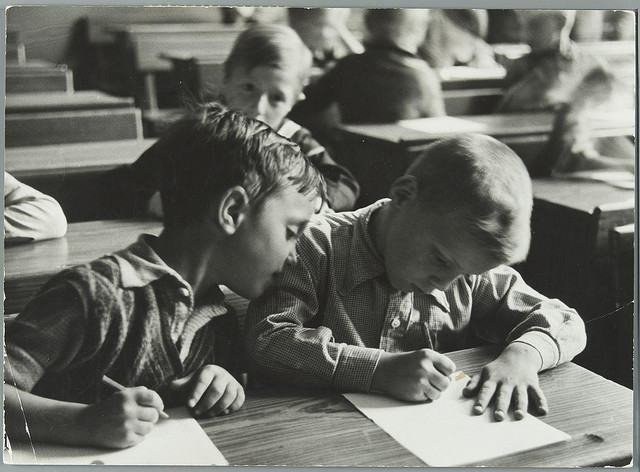
All children develop differently, however, there are common trends and milestones that many children exhibit. Students with learning disabilities may perform differently in academic and social-emotional development. The following lists some differences between the academic and social-emotional development of students with and without learning disabilities.

students

Students with Learning Disabilities

Academic

  • Language
    • Smaller vocabulary
    • Use shorter sentences
    • Difficulty adjusting language toward listener
    • Difficulty interpreting others
    • May have difficulty with on-going conversations
  • Struggle with disappointing their school’s, parents’, and their own expectations (Smith, 2004)

Social-Emotional Development

  • Learned helplessness
    • Children feel defeated before they begin assignments/projects
    • Children credit success to luck
  • Social Imperceptiveness (Smith, 2004)
    • Poor perception of self which leads to less peer acceptance
    • “Lack insight into the affect, attitudes, intentions, and expectations others communicate verbally and nonverbally” (Smith, p 274).

Students without Learning Disabilities

Academic

  • Language
    • More complex vocabulary
    • Longer, more grammatically complex sentences
    • Easily hold on-going conversations
  • Find more success in completing projects, tests, and other assignment to the standards set by themselves and others

Social-Emotional Development

  • Learned success
    • Children have more self-esteem and can apply this to find success in academics and with peers
    • Contribute success to self
  • Social Competence
    • Ability to easily communicate
    • Ability to relate to others
    • Can alter language and behavior for different settings and with different people
    • Has a wide variety of relationships, including friends

Reference

Smith, C.R., (2004). Learning Disabilities: The Interaction of Students and Their Environments (5th ed.). New York: Pearson Education, Inc.

young children

Is My Child Different

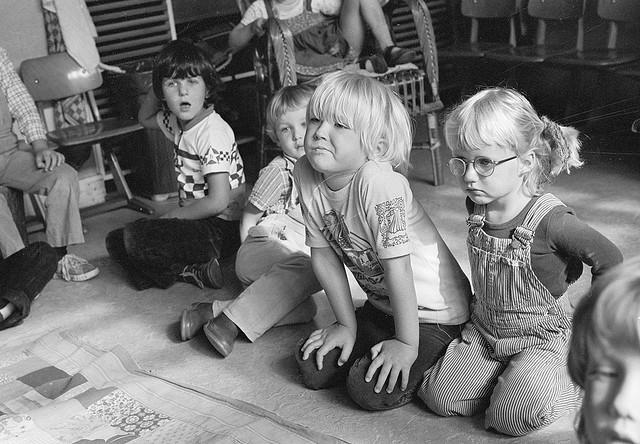
As a parent, it is common to ask is my child different. All Children are different from the color of their hair to their little birth marks, but how do you know if something is wrong. It is difficult to distinguish from being an overprotective parent to really knowing something is wrong.

young children

There are milestones to look for which can be key indicators to your child’s development and if things are interfering with it. When our son was about three months old, we as a family started noticing that his head wasn’t as round as it should of been and that his head always leaned to one side. By working with his physician, we set up to get him a helmet and physical therapy. Although neither of them were exactly fun, they helped our son to develop a more well rounded skill set that was more typical for a baby his age and now that plays into him as a toddler. Although neither completely changed our son (he will always be left handed because as a baby that’s the only side he knew), it does help to push him forward into one day becoming a successful adult.

Here are some keys to look for in your child: (remember exposure is key- if you haven’t really let your child try it, they will probably not master it)

Gross Motor- sitting at 6 months, crawling at 8 months, walking around 12 months

Fine Motor- bangs toys together by one year, colors by eighteen months, builds with at least eight blocks by three years

Cognitive- a curiosity in things around them, simple play with toys by six months, points to get attention by eighteen months, makes believe by three years

Social- establishes eye contact by two months, hugs and kisses parent by eighteen months, tries to comfort others by two years

Language- responds to  own name by six months, has at least a word by a year, has hundred plus words by two years, follows three step directions by three years

Self-help- orally exploring toys by eight months, helping with simple household tasks by two years, dressing self by three years

If you have any questions about your child’s development, listen to your gut and seek out a doctor’s advice. Interventions can take place as soon as a baby is born, and the younger they are the easier it is to curb the effects of whatever is postponing their typical development. It is common for both parents to not necessarily agree in seeing the difference, so if either suspect a delay, get a third opinion of a doctor. If nothing else, it will ease one parent’s worries.

Attitude, Litigation, and Legislation

How Thinking has Changed in Understanding of Students with Disabilities

The following explains how thinking has changed in understanding of students with disabilities and how legislation and litigation impact the education of students with disabilities:

Attitude, Litigation, and Legislation

The understanding of students with disabilities has evolved over time. Historically they were looked at as a subgroup of the community that was not able to be educated and had no place in the school system. Instead many were institutionalized and kept out of mainstream society. In 1954 when Brown v. Board of Education occurred, it started many families asking themselves why their children with disabilities did not also get equal education It started a series of lawsuits in the 1960s and 1970s. Although many states were still permitting schools to deny students with disabilities up until the 1970s, the policy did eventually change in 1972 with Pennsylvania Association for Retarded Children v. Commonwealth of Pennsylvania. It was then decided that all children had the right to free public education and that the parent’s of children with disabilities be notified when any changes occurred in their children’s education program (Heward, 2003).

In 1975, congress passed the Education for All Handicapped Children Act. It has since been amended multiple times, and in 1990, it became the Individuals with Disabilities Education Act, IDEA. It encompasses the responsibility of the state to provide education to all children with disability, age 0 – 21, in the least instructive environment with due process safeguards. It also gives guidelines that parents and students must be part of a collaboration group with the educators, and it provides safeguards for the evaluation process of the children (Heward, 2003).

Additional laws and amendments have been made to encompass even more benefits and protections for these children. With each of the new laws, schools are given greater guideline to abide by in order to get federal funding. Although the funding is not nearly enough, about 8%, for these children’s education, which costs 2.3 times that of a regular student, it is an important part of ensuring the proper educational system to benefit these children (Heward, 2003).

References

Heward, William L. (2003).Exceptional Children: An Introduction to Special Education. Ohio: Merrill Prentice Hall.

impairments

Visual Impairments

Those with visual impairments can find many challenges in education and in their social environments. By educators being prepared and open toward including those with these impairments, they can help to bridge the gap in the children’s development. Children can also find help through specialized programs and organizations. It is important for the teachers, parents, and students to explore all of their options available to the child and pick the best environment for the child in order to maximize their education and quality of life.

impairments

Visual Impairments

Sight involves many complex processes, so that individuals can explore their world through pictures. It takes a part of the eye to filter light through, part to convert the light energy into electrical energy, and then the brain has to translate that into objects/pictures (Turnbull et Al, 2002). When part of this process is damaged at birth or later in an individual’s life, this will lead to visual impairments (Turnbull et Al, 2002). There are three main classifications for the visual impairments within schools: low vision, functionally blind, and totally blind (Turnbull et Al, 2002). If a student is obtaining no valuable information from their sight, then they are considered to be totally blind, but when the student is using their sight to enhance the information that they primarily obtain through their other primary senses, they are classified as functionally blind (Heward, 2003). If the child, however, uses their sight as their primary source for obtaining information and sometimes uses other senses to enhance this information, then they are considered to have low vision (Heward, 2003). To be legally blind a person must have a field of vision that is limited to seeing only twenty percent of their field of vision, which is clinically measured by a professional (Turnbull et Al, 2002).

When a child has any vision loss, they are often confronted with additional issues that interfere with obtaining an education. When it does interfere with education, the child is considered by the definition provided by IDEA to have a visual impairment (Turnbull et Al). The impairment can hinder the child’s self-concept and environmental interactions and exploration. A teacher can assist the child by providing a wide array of experiences where the child can discover the world around them with their other senses (Turnbull et Al, 2002). Through exploring the world, they can expand their vocabulary, fine motor, and cognition skills. It is also helpful to have the children interact with their sighted peers, so that they can build friendships and experience appropriate social interaction, which can in turn help to build self-concepts. It is also important for educators to incorporate assistive learning technology and to be aware of their communication with the child, as often those with sight communicate through physical cues, which those with vision impairments cannot see.

As there are many obstacles for a child with vision impairments to overcome, they can become active in the social experiences available to them. In Arizona, there is the Arizona Center for the Blind and Visually Impaired, the Foundation for the Blind, the School for the Deaf and Blind, Arizona Industries for the Blind, Arizona Center for the Blind and Visually Impaired, and many others. These groups offer opportunities for those whom are blind to interact with others that are experiencing the world similarly, through social events, special classrooms/schools, and group therapy.

References

Turnbull, Rud, Ann Turnbull, Marilyn Shank, Sean Smith, & Dorthy Leal (2002). Exceptional Lives: Special Education in Today’s Schools(3rd ed.). Upper Saddle River, New Jersey: Merrill Prentice Hall.

adult on his own

Adults with Mental Retardation

As children complete high school, often there are expectations of independence and decisions to make on their next steps. This transition can be difficult for anyone, especially those with mental retardation. There are many decisions for them to make from this point on, such as living, employment, extra training, and social decisions. Throughout the rest of their life, they face many choices. The following paper will discuss their needs and provide ideas on how the community can help these individuals to be successful.

The congress has set up four big goals aimed to make adult-life more accommodating for those with disabilities (ADA). These goals include: equal opportunity, independence, inclusion, and productivity (ADA). Equal opportunity includes the chance for those in the United States with disabilities to get higher educations and the chance to live the ideal American life (ADA). Independence includes the right for those with disabilities to make their own decisions and assert control over themselves and their environment (ADA). Inclusion includes the right of those with disabilities to have full participation as a citizen in the U.S. with access to the same community resources, activities, and shelter that their non-disabled peers have access to (ADA). The congress’ idea of productivity includes the right of individuals with disabilities to have jobs where they contribute to their own financial standing, as well as, their families and community (ADA). With these ideals in mind, those with mental retardation have opportunities available to them that are in context with their own limitations.

adult on his own

At eighteen years of age, most individuals gain legal independence, however, if a parent chooses to challenge this, the individual’s rights can be overturned due to mentally competency. If the individual with mental retardation receive independence, they have many choices to make. According to Turnbull, Turnbull, Shank, Smith, and Leal (2002), 2.5 percent of individuals with mental retardation enroll in postsecondary academic programs after high school, 5.7 percent enroll in post secondary vocational programs after high school, 40.8 percent become competitively employed, 14.8 percent live independently, and they earn 8,274 dollars as average annual compensation for workers.

Many factors contribute to the success of Adults with mental retardation. They include self-determination, community resources, and social adaptation. As they go through school and therapy, they are often preparing for life after school. Once they get to the point of adult standing, they need to be able to make decisions, enquire on needs, and search for resources. They need to be able to keep appointments, go to the doctors, take medicine, get groceries, keep hygiene, and live through daily transitions. If they are unable to do any of these things, they need to ask for the resources and/or get the appropriate services.

It is important for these individuals to receive support through verbal confirmation and physical resources during their high school to young adult transition and throughout their adult life. The community can provide ongoing services for those that need continued therapies. They can also provide accessible resources, such as job placement, social opportunities, and reference material for those with mental retardation. As a community resource, it is important to find what is appropriate for the individual as each is different. It may be helpful to have specific counselors in their last semester at school to go through their options with them. They might also need ongoing caseworkers that check-in on them yearly to make sure they are getting the services they desire. These caseworkers can also help the individuals in service to find job opportunities, social events, and answers to their other questions. They can give them referrals to the organizations that those in service have not been able to find for themselves. Some individuals with mental retardation may require supervision for some activities, like cooking, so ongoing respite may be necessary. The ongoing respite can also help those individuals to feel more independent, as they can live on their own terms with workers that help when necessary. This resource along with the other one’s desired by the person in service can help the individual with mental retardation find success in living a fulfilling life.

Each person with a disability is different. They merely suffer from a common disability, such as mental retardation, but in fact are they themselves individuals with their own wants and desires. It is important for us as teachers, caseworkers, families, and other providers to support them in defining their own life. It is important to prepare them for the steps they take and then support them throughout their adventure.

References

The Americans with Disabilities Act. (n.d.) Information and Technical Assistance on the Americans with Disabilities Act. Retrieved December 4, 2005, from www.ada.gov

Turnbull, Rud, Ann Turnbull, Marilyn Shank, Sean Smith, & Dorthy Leal (2002). Exceptional Lives: Special Education in Today’s Schools(3rd ed.). Upper Saddle River, New Jersey: Merrill Prentice Hall.