emotional behavioral disorders

Emotional Behavioral Disorder: Accommodations and Modifications

The following is a list of needs and modifications to help a child with an emotional behavioral disorder, EBD, find success in all environments.

Need 1:

Kids with an Emotional Behavioral Disorder may have difficulty establishing a variety of relationships

Modification:

  • Set up goals aimed at social interactions
  • Use role-playing situations
  • Use seating arrangement to encourage social interaction.

Need 2:

Children with an emotional behavioral disorder often have skewed views of their long term possibilities and desires

Modification:

  • Include students with EBD in the planning process and IEP, so they can visual and voice their goals.
  • It can also help for them to note the goals it will take to get there.

Need 3:

Children with an Emotional Behavioral Disorder are often achieving academically below their non-disabled peers in reading, writing, and arithmetic.

Modification:
  • Set up personalized goals and strategies, so that the child can find success.
  • Early detection and intervention is the best strategy
  • Children with Emotional Behavior Disorders may present extra challenges to caregiver in forms of outbursts and disobedience. The caregiver cannot give into this as it only validates the child’s behavior. Instead caregiver needs to challenge students to keep them learning new skills

Need 4:

Children with an Emotional Behavioral Disorder may appear easily distracted, less attentive, and have poor concentration

Modification:

  • Set clear rules and expectations with visual stimulating material.
  • By setting up an environment and materials that are stimulating, children can stay more engaged and interested.

Need 5:

Children with an Emotional Behavioral Disorder may be dishonest, blame others, manipulate situations, and bully others

Modification:

  • Clearly post rules
  • Stay consistent in expectations
  • Set limits and Boundaries
  • Use behavior contracts
  • Use a highly structured environment
  • Develop a cue word for the child to note inappropriate behavior

Need 6:

Students with Emotional Behavioral disorders are often truant from school and disruptive when present

Modification:

  • Communicate with parents, so similar strategies and expectations are used at home

Need 7:

Kids with an Emotional Behavioral Disorder often have low-self esteem, high stress points, and may engage in self-injurious behaviors

Modification:

  • Establish a quiet cool off area
  • Teach self-talk to relieve stress and anxiety
  • Teach and put in place self-monitoring and self-control techniques
  • Provide time for relaxation techniques
  • Be aware of your speech and non-verbal cues when talking to the student
Related Articles to ‘Emotional Behavioral Disorder: Accommodations and Modifications’

Emotional and Behavioral Disorders: A Quick Break DownEmotional and Behavioral Disorders: Definitions and Challenges
Toddler Vocabulary: Facts to Know

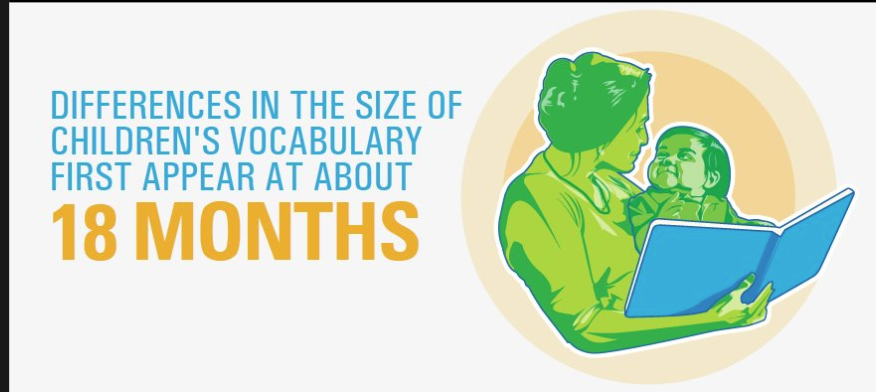
There are some important facts to know about a toddler vocabulary. It is every changing and ever growing. It is important to stay on top of it and make sure your child doesn’t fall behind because vocabulary at ages 3-5 is directly linked to reading comprehension at ages 10-11. This means where they are at now directly impacts their future. It does not mean all hope is lost if your child seems to be behind on language compared to their peers. It simply means that there is work to be done and tons of professionals happy to help.

toddler vocabulary

Here are some things you ought to know about toddler vocabulary:

  • Language skills grow rapidly from 2-3 years old
  • Between ages 1 and 2, children should be saying new words each month
  • Between ages 1 and 2, putting two words together (“my toy”)
  • Between ages 1 and 2, using one-and two-word questions (“more juice?”).
  • 13-18 months, receptively* identify 1-3 body parts
  • Child uses about 10-20 words at age 18 months including names
  • 2 years, respond to simple yes and no questions
  • 2 years, follows two step directions
  • A typical 2-year-old knows 20-200 words
  • A typical 3-year-old knows about 1,000 words
  • Age 3 years, understands use of objects,  parts of objects, descriptive adjectives, pronouns, and some quantity concepts (one, all)
  • At 3 years of age, comprehends approximately 500-1000 words
  • At 3 years of age, knows difference between sexes and own sex
  • By 3 years of age, knows simple spatial concepts (in/on/under)
  • By 3 years of age, able to match and identify colors

*A toddler vocabulary is not just what they say but also what they hear or their receptive constabulary. It is what your child understands by listening. Can they follow directions? Do they know specific names?


Related Articles to ‘Toddler Vocabulary:Facts to Know’

Late Talkers: From Speech Delays to Spoken Language Success

Should My Child be Talking? Could My Child Have a Speech Delay?
Learning Disability and Communication Disorder

autism and technology

Autism and Technology

Can Autism and Technology Work Together to Help Solve on Upward Epidemic

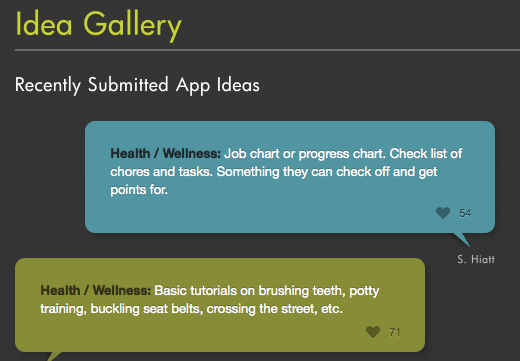
It seems like technology is everywhere so why not for those who need it most. While the iPad is getting more readily assessable even to infants (yes I saw the Fischer-price case), why not for those with other challenges. There is a site just for blogging ideas about what apps would help your children. It is called Hacking Autism (although perhaps there are more similar communities out there) and the point is to share about what your son/daughter needs from technology so that a programmer might now what is best for your child. The idea is a community win-win for parents, children, and programmers.

autism and technology

Here are some of the best ideas I saw, but let me know your favorites:

  1. Time Sequencing: A simple schedule based primarily on graphics. Clear, concise, and uncluttered. It would be great with an optional timer built in.
  2. An app for therapy data. Pen and paper do seem to be a thing of the past.
  3. A sentence building app for non-verbal children. There are already things in place, but they are also sadly out of date.
  4. Life skills sequencing cards. Simple tasks broken down even smaller so that they can easily see next steps while doing the process and work on memorizing it to do it eventually without the visual.
  5. It would be really helpful to have an app that would enhance a persons ability for keeping track of and remembering their own belongings. The app could have a generic list of items (coat, bag, hat, etc) and allow for creation of new items. All the person or caregiver would need to do is open the app, touch the items they have and an automatic reminder could be set.
  6. Create a puzzle interactive game where children have to use a character to move and travel to different environments and settings (school, home, etc.) and solve simple social problems such as get someone to play with you, ask for help or play a game.
  7. I would love to see an app that provides different facial cues and prompts the “player” to identify how they think the person is feeling.
Related Articles to ‘Autism and Technology’

Autism Warning Signs: Early Detection

Autism: Awareness is the Key to Intervention

Autism: A Brother Tells His Story

adaptive behavior

Adaptive Behavior and Behavior Scales: Truly Defining a Child

Adaptive behavior means that the behavior or “anything that an organism does involving action and response to stimulation” (Merriam-Webster, 2006) is adaptive or “modification of an organism or its parts that makes it more fit for existence under the conditions of its environment” (Merriam-Webster, 2006).

adaptive behavior

In other words…Adaptive behavior is the ability to adjust to one’s environment in order to prosper. Adaptive behaviors include: communication, self-help skills, socialization, and motor skills. Communication can be broke down into receptive, expressive, and written. It is something that may be quantified in order to place a student in education, define services needed, or determine the future of a child. With so much riding on how a child’s adaptive behavior is perceived, how is it truly determined. There are behavior scales that are normally rated by many people in the child’s life. The more the better it can give a more well rounded picture of the individual, but still problems arise as all people might not have a shared view.

Problems with Defining Adaptive Behavior:

  • It is hard to define adaptive behavior using words outside of adaptive and behavior
  • It is hard to specifically test adaptive behavior as it is a very broad picture that occurs in a variety of environments with a variety of different ingredients.
  • Tests Directly reflect the biases of the individuals filing them out

How to Correctly Asses Adaptive Behavior

  • Do lots of behavior scales from multiple individuals
  • If any scale is way off talk about it as a team and if possible get another person in a similar relationship with the child to fill one out. Then check for discrepancies and consistencies
  • Remember we all act differently in different environments. There is very likely going to be some discrepancies.
Related Articles to ‘Adaptive Behavior and Behavior Scales’

Supports Available for Children with Mental Retardation

Intellectual Disability and Different Intelligences