Special Education Teachers: Job and Responsibilities

Special education teachers use various techniques to promote learning. Depending on the disability, teaching methods can include individualized instruction, problem-solving assignments, and small-group work. When students need special accommodations in order to take a test, special education teachers see that appropriate ones are provided, such as having the questions read orally or lengthening the time allowed to take the test.

Special education teachers help to develop an Individualized Education Program (IEP) for each special education student. The IEP sets personalized goals for each student and is tailored to the student’s individual needs and ability. When appropriate, the program includes a transition plan outlining specific steps to prepare students with disabilities for middle school or high school or, in the case of older students, a job or post secondary study. Teachers review the Individualized Education Program with the student’s parents, school administrators, the student’s general education teacher, and any others who are an essential part of the student’s development. It is essential that the special education teacher listens to the group as a whole and the the IEP is truly a group collaborative agreement. Teachers work closely with parents to inform them of their child’s progress and suggest techniques to promote learning at home.

Special education teachers design and teach appropriate curriculum, assign work geared toward each student’s needs and abilities, and grade papers and homework assignments. They are involved in the students’ behavioral, social, and academic development. They help the students develop emotionally, feel comfortable in social situations, and develop awareness of socially acceptable behavior. Preparing special education students for daily life after graduation also is an important aspect of the job. Teachers provide students with career counseling or help them learn routine skills, such as balancing a checkbook.

There are many aspects to the jobs within special education, but the heart of the job is helping students reach their full potential. They can help children to succeed and help parents along the education journey.

Learning Theories and Special Education

There are many different beliefs about how people learn. Within schools, these theories are applied by teachers to maximize the experience of students. By applying an applicable theory that is prevalent to the students, the teachers can help students to retain pertinent information. This applies to how learning theories and special education can work together.

In special education classrooms, teachers need to apply these learning theories, so that students in SPED classrooms can get the most out of their learning. Some of the theories that apply to special education classrooms are: Gestalt, Connection Theory, L. Atincronbsch and R. Snow, Component Display Theory, Gagne’s Conditions of Learning, Cognitive Load Theory, and Sign Learning Theory.

The Gestalt theory is good because it encompasses grouping, which may make it easier for students. It is important to remember, however, that some connections may need to be made for students both verbally and in application because all of the students in an SPED class may not be able to connect the dots independently. The Cognitive Load theory and Sign Learning theory discuss this thought of simplifying and perhaps drawing lines to fully help students learn. A way to help connect the dots for some special education students is the Connection theory. It is based on the students learning from the cause-effect relationship of stimuli and response. Component Display Theory and Conditions of Learning are based on including a variety of elements to learn from both verbal and hands-on. They also discuss a similar structure that is helpful to follow during the learning process.

Taking all of these learning theories into account, the instructor can teach lessons based on how the students will learn the information the best. This seems to interfere with the beliefs of inclusive school settings. Since special needs children are different and learn differently, a traditional teacher may not be directing her lessons at this minority group. One of the mothers I currently work with wants to only have her child in inclusive classrooms. She has even fought a private school to allow for this. It is because her daughter is doing great at learning from peer example, something that the inclusive environment is best for. However, this does not mean that the teacher will be as well prepared to teacher her daughter. This seems to be the most difficult part of learning theory, clumping the kids into one or two categories, when in fact each are so individualized.

NBPTS, the National Board for Professional Standards, encourages teachers to discover their own belief in teaching theories. This helps to provide self-awareness of the teachers. By providing a structure for teachers to be reflective, it can help to assess the teachers’ job at teaching and reaching their students, which in turn helps improve the overall educational environment.

It can also allow teachers to recognize how they are learning best, so that they are encouraged to continue expanding their knowledge. For example, I learn best from a multi-approach, such as the Component Display theory discusses. I also learn well from anchored instruction, Adult Learning, Social Learning theory, and Cognitive Flexibility theory.

I talk with a couple of my families this week about their optimal learning environments and experiences. It seems some learn best when they can apply it to rules, some when they can group it, and some when they are actually applying it. I side with those who learn best with application. Their seems to be a consistency between those I asked and my own beliefs that special needs children learn best from simplified lessons, in non-distracting environments, with fun lessons that they can see and feel the cause-effect of. However, it is not always possible to make all lessons agree with what the child wants to do.

It is important for both parents and teachers to remember to have patients with their children. It is also great to remember that there is a long list of theories that can be applied as different strategies to help teach children, so one is not working, find a new one.

Attitude, Litigation, and Legislation

How Thinking has Changed in Understanding of Students with Disabilities

The following explains how thinking has changed in understanding of students with disabilities and how legislation and litigation impact the education of students with disabilities:

Attitude, Litigation, and Legislation

The understanding of students with disabilities has evolved over time. Historically they were looked at as a subgroup of the community that was not able to be educated and had no place in the school system. Instead many were institutionalized and kept out of mainstream society. In 1954 when Brown v. Board of Education occurred, it started many families asking themselves why their children with disabilities did not also get equal education It started a series of lawsuits in the 1960s and 1970s. Although many states were still permitting schools to deny students with disabilities up until the 1970s, the policy did eventually change in 1972 with Pennsylvania Association for Retarded Children v. Commonwealth of Pennsylvania. It was then decided that all children had the right to free public education and that the parent’s of children with disabilities be notified when any changes occurred in their children’s education program (Heward, 2003).

In 1975, congress passed the Education for All Handicapped Children Act. It has since been amended multiple times, and in 1990, it became the Individuals with Disabilities Education Act, IDEA. It encompasses the responsibility of the state to provide education to all children with disability, age 0 – 21, in the least instructive environment with due process safeguards. It also gives guidelines that parents and students must be part of a collaboration group with the educators, and it provides safeguards for the evaluation process of the children (Heward, 2003).

Additional laws and amendments have been made to encompass even more benefits and protections for these children. With each of the new laws, schools are given greater guideline to abide by in order to get federal funding. Although the funding is not nearly enough, about 8%, for these children’s education, which costs 2.3 times that of a regular student, it is an important part of ensuring the proper educational system to benefit these children (Heward, 2003).

References

Heward, William L. (2003).Exceptional Children: An Introduction to Special Education. Ohio: Merrill Prentice Hall.

Successful Collaboration

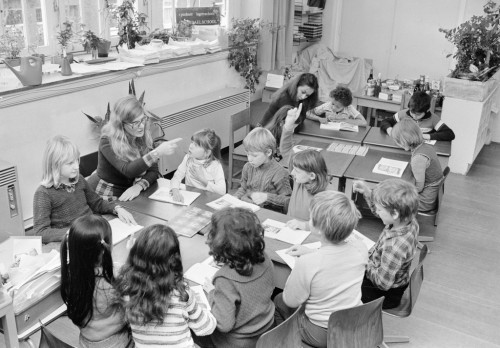
There are many things that go into a productive classroom and fulfilling education. For children in Special education classrooms including those with students that have learning disabilities, successful collaboration is a key element. It allows for fluidity through all of their services both at home and school. Collaboration can also bring together the elements and interrelationships of curriculum orientations, standards-based education, and program orientations. In order for all of these things to run smoothly, there are factors that affect program decision-making for the students. These ideas will be discussed in the following paper.

First lets define these elements in order to get a better understanding of what effects the students. Standard-based education is applying the same standards to those in special education, as to those not in special education (Turnbull, Turnbull, Shank, Smith, & Leal, 2002). This can effect the program and curriculum, as it will represent material that those in general education classrooms are also learning. It also means that special education will be working to have their students curriculum and program match the standards and can perhaps distract from the child’s own program or IEP, Individual Education Plan (Turnbull et al, 2002).

The IEP and program orientation are where goals are established for the student. These goals outline the students educational needs, as well as additional services that the student may need, including but not limited to speech therapy, occupational therapy, physical therapy, respite, and rehabilitation. According to 1982 legal ruling, an IEP should consist of reasonably calculated program and curriculum to enable the child to receive educational benefit (Wright & Wright, 2003).
The curriculum orientation is defined by the school districts standard-based education. If the school district does not adopt this policy, than the teacher can take in account the child’s IEP and set up curriculum to help the child reach their goal. There are some overlapping goals often found for children with learning disabilities, which should be accounted for when choosing curriculum (Turnbull et al, 2002). They include difficulties with information processing and metacognition (Turnbull et al, 2002). To overcome these difficulties, it is important for students with learning disabilities to be taught how to learn independently in self-directed ways (Turnbull et al, 2002). Another common curricular goal is for students to learn generalizations so that they can apply what they learn in the classroom on a larger scale to real life experiences (Turnbull et al, 2002). Finally students’ curriculum should promote the students’ self-esteem, motivation, and the students’ perception that they do have some control over their own academic progress (Turnbull et al, 2002). Often students with learning disabilities feel a sense of learned helplessness and low-self esteem from being unable to reach curricular goals through previous years (Turnbull et al, 2002).

As these three main terms have been defined, it is already apparent how much they affect one another. It can be hard for the teacher to set up a curriculum to fulfill the school districts standard-based education, as well as, the students’ federally mandated IEP or program. So although these ideals are all equally appreciated, they do not necessarily meet together in a unified manor, which promote the educational benefit of students. Instead perhaps other measures should be referred to for finding beneficial instruction. These include: researched-based criteria, parental concerns, a variety of assessment tools, and a positive professional classroom climate (Texas Education Agency, 1996). Researched-based criteria are “used to select the instructional materials that provide the structure for the classroom reading program. These criteria establish the need for systematic instruction and sufficient practice in a number of aspects” (Texas Education Agency, 1996).

With all of these ideals and important educational elements, it is easy to see how a teacher may be overwhelmed and how a student with learning disabilities may not reach there full educational potential. This makes the program-decision making an essential element to fluidity of the child’s education. Program-decisions within the school district are defined federally and locally, but often the special educator has choices about specific curriculum and instruction within the students program. As an educator it is important to look at what it expected of your program and find the curriculum and instruction that best fits your students. This can help promote success with curriculum and program and can even lead to successful standard-based instruction. The collaboration of these elements along with overlap into the students other services can provide the student the structure to be enabled to fulfill their true educational potential and reach many standardized norms, as well as their individualized goals.

Reference

Texas Education Agency. (1996). School Features that Support Effective Instruction. Retrieved May 20, 2006 from www.Idonline.org

Turnbull, Rud, Ann Turnbull, Marilyn Shank, Sean Smith, & Dorthy Leal. (2002). Exceptional Lives: Special Education in Today’s Schools (3rd ed.). Upper Saddle River, New Jersey: Merrill Prentice Hall.

Wright, Pete and Pam Wright. (2003). Your Child’s IEP: Practical and Legal Guidance for Parents. Retrieved May 20, 2006 from www.Idonline.org
Meaningful Teaching

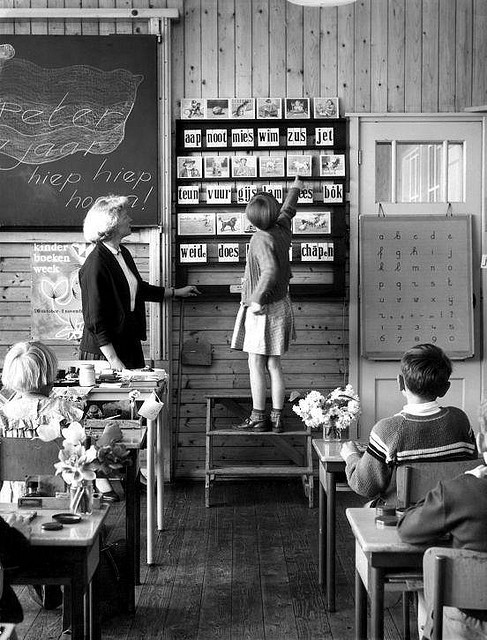
Meaningful teaching requires a multifaceted, technique-challenging strategy to maximize the impact for the students it effects. The teacher needs to use the resources available to them in order expand their own knowledge and satisfy the requirements that they are obligated by their profession to fulfill.

In any given classroom, there are a variety of individuals that have various cognitive levels, preferred teaching styles, and background/cultural history. It is important for the teacher to use the appropriate means to reach the large spectrum of students. For the teacher to be best prepared, it is important for them to set up educational goals, find appropriate curriculum, and develop a multifaceted approach to teaching the curriculum. This may involve reading the material, doing worksheets about the material, and incorporating a hands-on approach to learning the material. Since the teacher has so many expectations on them, it is essential that they continue their learning process daily, so that they can be more thoughtful in appropriately addressing their students.

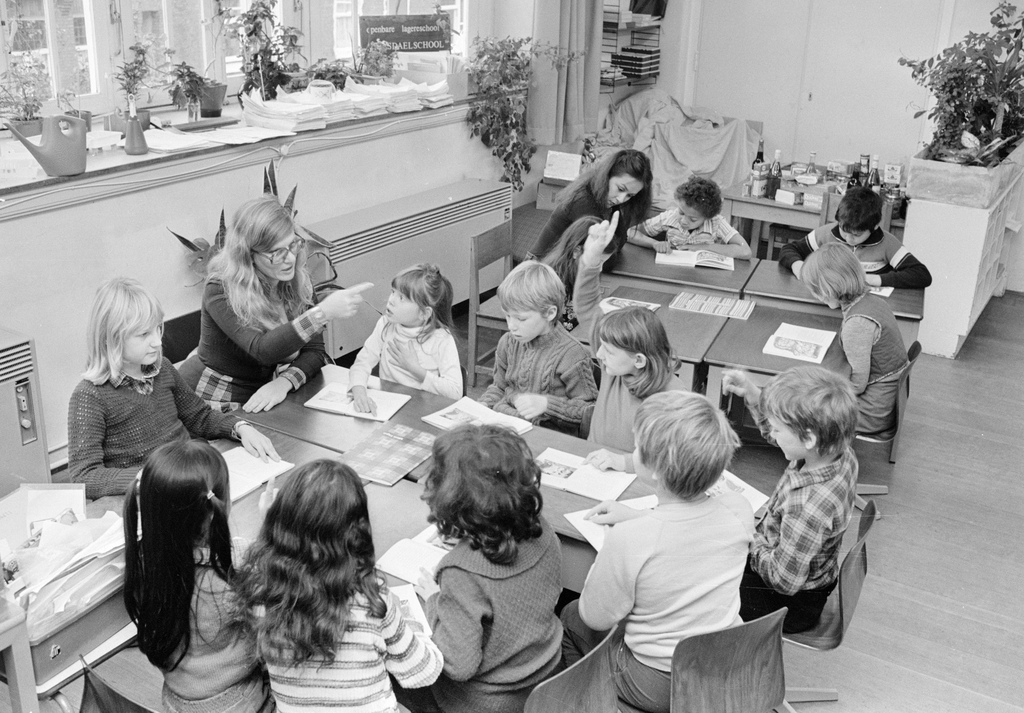
Children in classroom

By taking on the responsibility of teaching, you can help others to learn, as well as, learning yourself. This will require thinking on both the students and teachers behalf.

My own interests in becoming a special educator came from my belief in education, love of children, and desire to make a difference. While completing my undergraduate degree, I became involved in working directly with children that had developmental delays. These children were so lovable, and I found a reciprocating benefit from working with them. In the same way, my continued work with this specific group of children allowed me to continue to enjoy the benefits and challenges. There is such a need for positive, fresh faces in their classrooms.

Teachers are influenced by an array of outside inputs. It is important for them to balance their own inspirations, their goals for the students, and the cultural impacts to create an environment to meet the specific need of the individuals that they are teaching. It is necessary for teachers to stay active in revising their strategies and resources, so that they can remain fresh in the learning process and make the greatest impression possible on all of the individuals in their classroom.