Stress and Children

Stress and Children: The Lifelong Relationship

Stress and Children

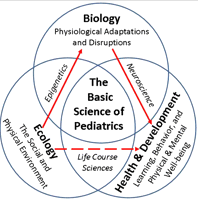
I recently read an interesting article from American Academy of Pediatrics on how stress in early childhood contributes to a life of health problems. Many of us are aware of this correlation, but the article is about how it is more than a simple correlation. Instead there are lasting effects that effects the actual make up of the brain. Early experiences can influence emerging brain architecture and as a result long-term health.

stress and children

Long-term effects of childhood adversity can include, poorer:

  • Academic achievement
  • Economic productivity
  • Health Status
  • Chances of dealing with stress later on in life

Although a child going through unhealthy stress is not a rat, consider this. There was a study on rats: mother’s who licked and cared for there newborn produced babies that had less exaggerated stress as adults. Compared to rats who did not care for their infants so religiously who had pups who then in-turn passed on this skill to their babies. These less cared for baby mice had worse skills for dealing with stress.

Stress and Children

The health status of children from stressful situations where they do not have a responsive caregiver can give different physiological effects which create:

  • the “wear and tear” effect on multiple organs, including the brain
  • a change in neuronal architecture which changes learning, memory, and executive functioning in the brain
  • impaired memory and mood control
  • more anxiety
  • hyperactivity
  • Problems in development of linguistics, cognitive, and social-emotional skills
  • Difficulty distinguishing between conditions of safety and danger

Literally a child’s early environment get under their skin and change the very make up of the child. The relationship between stress and children can create many poor outcomes. Helping a child get through it can make all difference. This means creating the safe environment to know that the adult is there and will help them through life’s unexpected difficulties.

Stuttering

Stuttering and How the Brain Functions

Stuttering is something that affects roughly 5% of children and usual roots itself from about 2-4 years of age. It tends to be a genetic trait that according to new research found in Cortex affects more than just speech. Speech is the most predominate part, however, so it’s what others notice.

Stuttering often starts with the consonants K, G, and T be repeated and may lead to other sounds. Less than 1% of children continue to experience stuttering into adulthood. It is often worsen when stressed by other factors such as crowds. The individual may suffer other facial twitches as well.

Stuttering

The newer research suggests how stuttering emerges from a brain structuring way, so if you think this problem might be effecting your child talk to your doctor right away. As with most developmental things, the sooner the diagnosis the better the outcome.

According to lead author Martin Sommer, a neuroscientist at the University of Göttingen in Germany,the results suggest that the left-hemisphere defect underlying a stutter causes trouble with sensory integra­tion in general, rather than specifically speech-related problems as was his­torically thought. “Like in stroke pa­tients, the right side seems to jump in and compensate,” Sommer ex­plains. But that part of the brain did not evolve to handle those tasks, so problems—such as a stutter—can emerge.            – Scientific American


A speech Pathologist can diagnosis and treat the symptoms.

Helping your child reach their full potential

Developmental Disabilities: How to Help a Child with Them

My Child has Developmental Disabilities, What can I do to be proactive in their life?

Just because your child has a developmental disability does not mean that you won’t be able to connect with them. In truth, they will need you more to help advocate for them, help them reach their goals, and to navigate through daily routines. Get involved in their routines. If they are already in therapies, take part in them and practice throughout the week with your child. If your child does not yet receive any services, do research on what your child specifically needs help with to overcome their developmental disability. Libraries and the internet are full of great ideas. There are also often support groups within the community for all kinds of developmental disabilities. It can often be helpful to hear other parents’ suggestions.

Helping your child reach their full potential

Here is a list of specific resources you might need to help your child reach their full potential:

  • Library
  • Support Group
  • Developmental Pediatrician
  • Therapies
  • Internet
  • Other Doctors
  • Medical Supply facility
  • Your local schools

Don’t worry you can do this. Just take one step at a time and know that each child is different.

learning

Learning Disabilities and Learning Environments

There are many expectations of the role of parents and family in the education of a child with Learning Disabilities, LD. There are also expectations of the role of teacher in relationship with parents and family. Both educators and parents share their experiences with the child with Learning Disabilities. They both have their own understanding of Learning Disabilities and their own hopes and dreams for the child. As both a special education teacher and a parent, it is important to think about the environment most conducive to the learning of this child with Learning Disabilities and how he/she is influenced by their surroundings. How to create the most beneficial environment for learning when a child has learning disabilities is an important key to finding success.

As with any child, they have both strengths and weaknesses. The parent needs to by aware of the fact that Learning Disabilities are not anything they or the environment has done to their child. It is a part of their individual genetic makeup. The biggest factor is to consider the specific academic learning disabilities the child might have, ex. math, reading. Parents need to be an active participating partner in their child’s education. The teacher would have close communication with the parent so her efforts and teaching can be reinforced at home. Making the importance not in the cosmetic make up of a class or home but in the ongoing dialogue between all those working with the child.

learning

Each parents understanding of a child with Learning Disabilities varies. They know that their child has difficulties and most try to compensate for their difficulties. For instance, if their child has difficulty reading, they might read for them in certain situations. If their child does not talk, they might let their child point to get what they want. These parents have similar expectations for their child. They want their child to do the best they can. They constantly encourage them to not give up when things are difficult. They want them to be able to read and write at least minimally so they can fill out a job application, get a drivers license, and a job.

Children with Learning Disabilities know they are different by the time they get to middle school. They know that school is harder for them, and they have learned to deal with it. By this time, they have learned their own strategies as to succeed in the classroom. They work harder, and they have found what defense mechanisms work best for them.

A multi-sensory environment can be the most conducive learning environment for any age child with Learning Disabilities. Different learning styles are taught and accepted in these environments. An LD child learns best in small groups with specific individual help. Extra help is needed, so smaller groups help provide the support necessary for success.

lessons for learning math

Lesson Plan Examples: Teaching Money to Students with Mental Retardation

The following include lesson plan examples for teaching money concepts, but it could be slightly modified for other math lessons. When teaching any child, it is important to consider what their needs are, strengths are, and the ways in which they learn. Does the child need hands on materials? Can they universalize subjects? Many students with mental retardation cannot. This means they need to learn with real money and in real life situations. That way once the concept is mastered the student can apply it to their life and not just fill out worksheets on it. Consider taking them on a field trip to practice or encourage parents to let the child help out when buying stuff from a grocery store or clothing store. It might also help to peek the child’s interest by using items they are interested in to purchase. For example, if they are into animals, talk about all the various expenses and help them to figure out shopping and care expenses. When looking at this example of a math lesson plan, think of how to make slight alterations to work with your specific kid on their specific need.

lessons for learning math

Curriculum Guides for Mathematics

Goal:

Students will be able to pay bills, including grocery and clothing, to increase independence in preparation for graduation.

Objectives:

  1. Student will be able to identify and label money, and then identify value of each piece.
  2. Student will be able to add their money in order to know amount possess.
  3. Student will be able to understand concept of spending less than they possess.
  4. Student will be able to add together items to prepare for check out.
  5. Student will pay for shopping without assistance.

Day One:

Objective: Student will be able to identify and label money.

Activity: Students will work with the money through flashcards and actual play to work toward identifying money.

Assessment:Student will identify the names and then the value of money pieces.

Day Two:

Objective: Student will be able to add their money in order to know amount possess.

Activity: Student will add money, including coins and dollars on work sheets, computer, and with actual money.

Assessment: Student will be able to add together money

 Day Three:

Objective: Student will be able to understand concept of spending less than they possess.

Activity: Students will participate in mock purchasing to better understand value of money.

Assessment: Student will pick out items costing less than what he/she possess.

Day Four:

Objective: Student will be able to add together items to prepare for check out.

Activity: Students will work on adding costs together with calculator or other tools available.

Assessment: Student will pick out two plus items at a time costing less than what he/she possess.

Day Five:

Objective: Student will pay for shopping without assistance.

Activity: Students will be able to pick out items they can afford and then pay for them independently at mock shopping center.

Assessment: Students will be able to pick out items they can afford and then pay for them independently.

Additional Activities

  1. Students take a field trip to a bank or store.
  2. Students have a mock money system of earning and spending.
  3. Student’s can do coloring pages, computer games, and other projects focused on money.

Additional Strategies/Suggestions

  1. Start with simple ideas, and then add on when student is ready. For example, students will probably learn the names of specific money and then add value to the coins and dollars.
  2. Students can work on matching/grouping money in order to work on identifying pieces.
  3. Students may find it easiest to begin with coins and then introduce the paper values of the dollar.
  4. Encourage involvement of all members that the students engages with in order to better benefit their success.

Resources

Gubler, Warren. (2001). Teaching the Value of a Dollar. Retrieved from http://www.cbsnews.com/stories/2001/01/18/hartman/main265268.shtml

Money Investor. (2004). Basic Money Skills. Retrieves February 20,2006, from http://www.moneyinvestor.com

Thomas, G. E. (1996). Teaching students with mental retardation: A life goal curriculum planning approach. Upper Saddle River, NJ: Merrill/Prentice.