art therapy

Art Therapy Working With Emotional Disabilities

Children who have emotional disabilities may need many options when it comes therapy. Art Therapy is one possibility. It is a treatment that children can start at a very early stage of life and continue throughout adulthood. Art therapy is something personal, so that the strategies learned could eventually be used in their own schedules to help get through the daily grinds of life.

art therapy

Educational Purpose

  • Individual’s need help overcoming emotional problems by connecting with their feelings and others through art
  • This connection can allow students to move forward and promotes personal growth

Teacher/Student Activities:

  • Students are normally in a group setting
  • Art allows students to express themselves, even when there are typical communication barriers and/or the individual is shy
  • After the students have expressed themselves through art, have the student describe the picture. It is often easier for the students to talk about their picture than themselves

Student Assessment/Accommodations

  • This is a medium for therapy that should be individualized and can be useful when the child enjoys doing art
  • If the child does seem to be connecting through art, it is important to see how they trust their environment and what they are willing to share about their art

Resources:

http://www.artsintherapy.com/

Newcomer, P. L. (2003).Understanding and teaching emotionally disturbed children and adolescents ed.). Austin, TX: Pro-ed.

Teaching Standards: Different Agencies Requirements

The following is a series of lists that outline the requirements of teaching standards for different agencies. As a teacher, there are many requirements to meet and exceed. Here’s a shortly compiled list of some of the things required of a classroom teacher.

teaching standards

National Board of Professional Teaching Standards, NBPTS

  • Demonstrate that teaching practice meets the exceptional Needs Standards*
  • Have access to at least 3+ student with exceptional needs prior to submission/ Field experience
  • Summit instructional material/videotape showing interactions w/ students
  • Demonstrate ability to engage/support students in communication/literacy lessons
  • Demonstrate ability to engage/support students in Social Development lessons
  • Use of assessments
  • Collaboration

AZ Department of Education Teaching Standards

  • Have access to at least 3+ student with exceptional needs prior to submission/ Field experience
  • A valid fingerprint card
  • Ed. Courses from accredited institution/ Appropriate Training with demonstrated knowledge
  • Pass Eligibility tests/extra training levels

Council for Exceptional Children, CEC, Teaching Standards

  • Have access to at least 3+ student with exceptional needs prior to submission/ Field experience
  • Demonstrate ability to engage/support students in communication/literacy lessons
  • Demonstrate ability to engage/support students in Social Development lessons
  • Use of assessments
  • Collaboration
  • Ed. Courses from accredited institution/ Appropriate Training with demonstrated knowledge
  • Articulate personal philosophy of Sp. Ed.
  • Relate levels of support to needed individual
  • Use research-supported methods for academic and non-academic instruction of individuals with disabilities
  • Learn necessary skills for teaching children with special needs, including but not limited to, adoption of technology, material, and pace
  • Uses/ supports Learning environments and social interactions
  • Use effective communication
  • Demonstrate instructional planning
  • Demonstrate Professional and Ethical practice
  • Teacher uses variety in instructional strategy

Interstate New Teacher Assessment and Support Consortium, INTASC, Teaching Standards

  • Demonstrate ability to engage/support students in communication/literacy lessons
  • Demonstrate ability to engage/support students in Social Development lessons
  • Use of assessments
  • Collaboration
  • Teacher uses variety in instructional strategy
  • Demonstrate ability to engage/support students in communication/literacy lessons
  • Demonstrate ability to engage/support students in Social Development lessons
  • Use of assessments
  • Collaboration
  • Relate levels of support to needed individual
  • Teacher continually evaluates self. Teacher understands how students differ and adapt curriculum
  • Teacher uses variety in instructional strategy. Instruction based on teacher’s knowledge, students, community, curriculum
  • Learn necessary skills for teaching children with special needs, including but not limited to, adoption of technology, material, and pace
  • Uses/ supports Learning environments and social interactions. Use effective communication

No Child Left Behind, NLCB, Teaching Standards

  • Use of assessments
  • Collaboration
  • Ed. Courses from accredited institution/ Approp. Training with demonstrated knowledge
  • Uses/ supports Learning environments and social interactions
  • Use effective communication
  • Demonstrate Professional and Ethical practice
  • Passing eligibility test/ Extra training levels
neurological differences

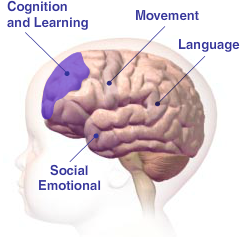
Baby Brain Development: A Map to Learning

Here’s a fun Interactive Site that let’s you truly explore baby brain development. It gives you questions, answers, and what to do to help your child reach there full potential. It looks like a great resource! Have fun exploring and learning to help your child grow!

Baby Brain Development

The Brain Map was adapted in 2006 by ZERO TO THREE from BrainWonders, a collaborative project (1998-2001) between Boston University School of Medicine, Erikson Institute and ZERO TO THREE http://www.zerotothree.org/child-development/brain-development/baby-brain-map.html

Finding Success in Writing with Learning Disabilities

Students with learning disabilities are often challenged throughout the language arts, so it should be no surprise that written language can be challenging for them. The following ideas are strategies that can be used to simplify learning to write so that a child with learning disabilities can find success:

Strategies that can be used to simplify learning for children with disabilities

  • Break writing down into three main concept: Basic mechanics (including handwriting, sentence structure, spelling, and punctuation), Content (vocabulary, organization, quality, clarity), and higher-level writing (revision process and planning).
  • Students need to learn basic rules such as correct letter formation and capitalizing proper nouns.
  • Practicing is an essential element of making a successful writer.
  • Focus on learning tasks only a couple at a time. Students with learning disabilities may have problem with spacing letters or spelling focus on these before moving onto more complex things.
  • Remember that writing takes a lot of coordination and various mental and physical processes, because of this, students may need to learn at a slower pace.
  • If a particular child appears to need extra help, find resource teachers, aides, therapists, or family that will work with the child. The sooner the child gets help the more successful and main streamed they can be later on.
  • Creative writing, like in journaling, can be a simple measure to increase the students practice without focusing on content.
  • Children can practice proofreading focusing on one specific item like punctuation or spelling. This can help the child to recognize problems and become more self-sufficient at writing.