ADHD Attention Deficit Disorder

ADHD: Fact, Fiction, and What Can Help

When your child is diagnosed with ADHD, so many questions can arise. Here are some facts to help you understand Attention Deficit Hyperactivity Disorder better:

Where to Get Help:

  • Ask your doctor
  • See a Developmental Pediatrician
  • Talk to your child’s school psychologist

Signs of ADHD:

  • Be easily distracted, miss details, forget things, and frequently switch from one activity to another
  • Have difficulty maintaining focus on one task
  • Become bored with a task after only a few minutes, unless doing something enjoyable
  • Have difficulty focusing attention on organizing and completing a task or learning something new
  • Trouble completing or turning in homework assignments, often losing things (e.g., pencils, toys, assignments) needed to complete tasks or activities
  • Not seem to listen when spoken to
  • Daydream, become easily confused, and move slowly
  • Have difficulty processing information as quickly and accurately as others
  • Struggle to follow instructions
  • Fidget and squirm in their seats
  • Talk nonstop
  • Dash around, touching or playing with anything and everything in sight
  • Have trouble sitting still during dinner, school, and story time
  • Be constantly in motion
  • Have difficulty doing quiet tasks or activities
  • Seem impatient
  • Blurt out inappropriate comments, show their emotions without restraint, and act without regard for consequences
  • Have difficulty waiting for things they want or waiting their turns in games

ADHD is:

  • A Neurobehavioral Disorder
  • Syptoms often present before age seven
  • Often Characterized by lack of focus, impulsiveness, and sometimes hyperactivity
  • Believed to effect 3-5% of children globally with 2-16% diagnosed
  • Diagnosed 2-4 x’s more in boys
  • It is normally tested on rating scales

ADHD is NOT:

  • Although it can be associated with other disorders, it does not mean your child has one of these disorders
  • Mean your child will go down a bad path in life
  • A life-long sentence. Only 30-50% of those with it continue having issues with it into adulthood.

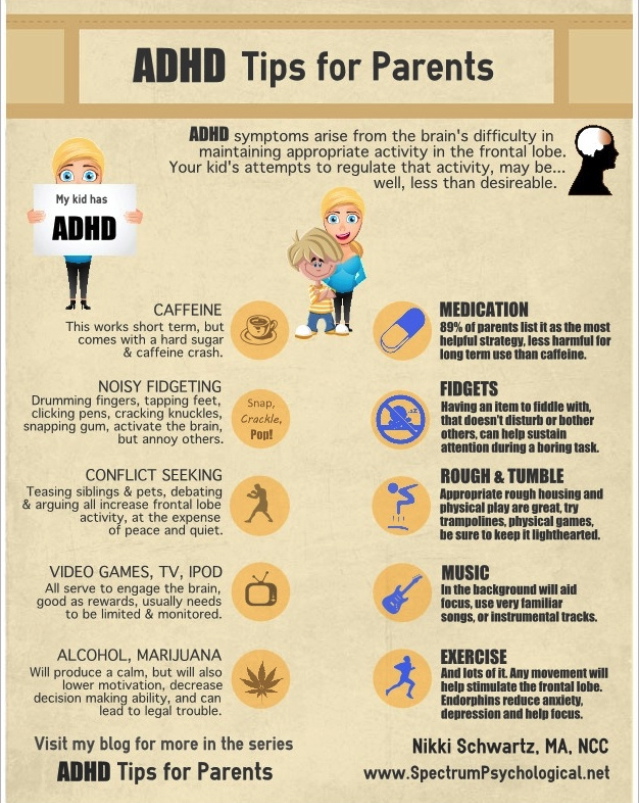
Some Things to Help:
ADHD Attention Deficit Disorder

Articles Related to ‘ADHD: Fact, Fiction, and What Can Help’

ADHD and ADD: How to Help a Child Effected
Aspects of Behavioral Disorders

Qualifying for Special Education: What to Know

autism in the workplace

Autism in the Workplace: Shared Success

Autism can be challenging anywhere, but sometime autism in the workplace is a key to success. Individual’s with Autism have a unique set of traits that help lead to success in certain work environments. Sometimes they have to steer their own way to success because the typical career path that starts with college can be challenging. College is often times a very social environment, and this is not always the best place for someone with autism. Considering 1 in 88 children are on the autism spectrum, a lot of future and current workers do have autism. The question is where do they fit.

This year alone, 50,000 adolescents with autism will turn 18.

According to a recent NPR article, a natural fit for them is in the tech industry. Why? Because interaction is limited. They can work independently without lots of social interaction, and they can use their great focus to do a great job.

High-tech jobs can be a perfect fit. A neurologist at Children’s Medical Center in Dallas, says people on the high-functioning end of the autism spectrum often have an amazing ability to hyper-focus on a task.

A Texas based company, which solely looks at reaching this untapped marked and hiring them into a shared success of employee and company says:

“We’ve got this one guy, for example; his productivity is three times as productive as the person doing his job who did not have cognitive disabilities before him. And his error rate is 2 percent. He is 98 percent accurate. He’s a phenomenal worker”

If you need more help finding employment for an individual with autism, here is a great career guide.

autism in the workplace

Related Articles to ‘Autism in the Workplace’

Autism: An Attribute to Success in the Workplace

Autism Warning Signs: Early Detection

transition to adulthood

Transition to Adulthood: How to Ease the Transition and Plan Ahead

Planning the Transition to Adulthood

There are many factors to take into account when planning a student transition to adulthood. This transition can be compounded when intellectual disabilities are involved. Here are some things to consider in making the transition to adulthood more student lead:

• Designed within an outcome-oriented process, which promotes movement from school to post-school activities, including post-secondary education, vocational training, integrated employment (included supported employment), continuing and adult education, adult services, independent living, or community participation.

• Based upon the individual student’s needs. The transition plan takes into account the student’s preferences and interests.

• Includes instruction, related services, community experiences, the development of employment and other post-school adult living objectives, and, when appropriate, acquisition of daily living skills and functional vocational evaluation

transition to adulthood

Other Things to Consider in the Transition…

School-to-Work

What help is available for learning disabled adults seeking jobs?

Self-Advocacy

Self-advocacy refers to:

An individual’s ability to effectively communicate, convey, negotiate or assert his or her own interests, desires, needs, and rights.

It involves making informed decisions and taking responsibility for those decisions.

  • The importance of developing self- advocacy skills to access services in the classroom
  • Study Skills are necessary for students to become self-advocates

Transition Skills

You are getting ready for some major changes in life.

  • What are they and how will you get there?
  • What do you need to do to be successful at what you do?

Patience

We all make mistakes.

Support Network

Friends and family to get you back on your feet can truly make a difference of conquering your goals.

Ways to make friends

  • Develop hobbies
  • Sports
  • Any extracurricular clubs
  • Jobs
  • Church
  • Volunteer work

Communication

In the workplace, there is a need to know for appropriate response, like:

  • What is OK to say
  • What is appropriate conversational distance
  • What tone is correct for the situation

Good Behavior

  • Maintaining attention
  • Listening
  • Taking turns
  • Being polite
Related Articles to ‘Transition to Adulthood: How to Ease the Transition and Plan Ahead’

Self-Advocacy: Why It’s Part of the Transition

Intellectual Disability: Welcome to Adulthood

early sexual activity in children

Early Sexual Activity in Children: Know the Facts & Help Your Child

Early sexual activity in children can occur for a myriad of reason and with a wide variety of consequences. Here are some facts to know in order to help your kids:

Reasons of Early Sexual Activity

  • Today’s culture promotes early sexual activity with little regard to the consequences
  • Students are inundated by the message that early sexual activity is an acceptable decision that will promote popularity and solid relationships
  • Lack of communication at home whether about why to be abstinent or protection
  • Overall lack of sex education
  • Lack of monitoring by responsible adult (either outside of the home or within the home)
  • Peer Pressure
  • Contradicting messages from family, school, friends, and the media
  • Self-doubt
  • Lack of education while going through radical physical/hormonal changes
  • Low self-esteem

early sexual activity in children

Consequences of Early Sexual Activity:

  • Self esteem issues
  • Stress of an image or reputation to uphold
  • Center of critiques from others, often negative
  • Change in attitude towards school and authority
  • Difficult time focusing on her school work
  • Loss of respect toward adults
  • Provocative clothing
  • Contracting a disease
  • Teen Pregnancy
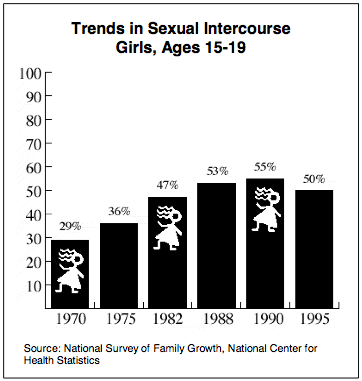
  • Adolescents who have sex early are less likely to use contraception, putting them at greater risk of pregnancy and STDs

Between 2006 and 2008, 14 percent of female adolescents and 25 percent of male adolescents had sex for the first time with someone they had just met or with whom they were “just friends.” –National Center for Health Statistics

How to Help Your Child

  • Talk with them openly
  • Be supportive
  • Encourage positive outlets
  • Educate them on sex
  • Monitor your child: know where they are at all times
  • Watch for warning signs, like sudden withdrawal
  • Get them involved in positive activities
  • Know your child’s friends and their significant others
Articles Related to ‘Early Sexual Activity in Children: Know the Facts & Help Your Child’

Delinquent Habits: Help Your Children Overcome

Alcohol and Drug Abuse: Know the Facts

autism

Autism: ABA Therapy, Applied Behavior Analysis, Getting the Facts

autism

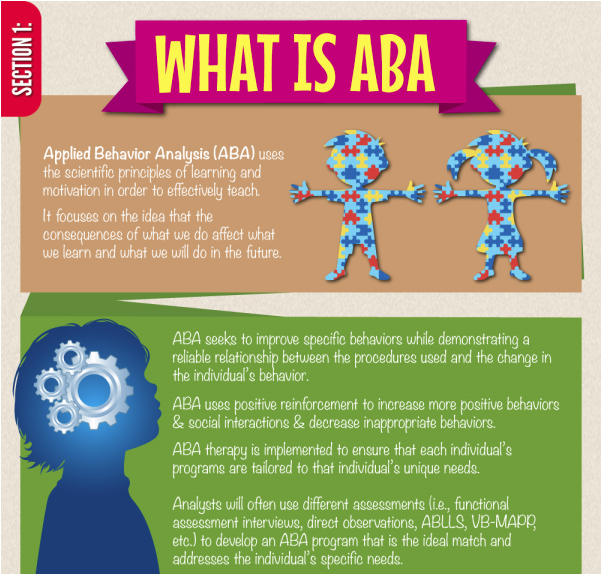
Autism effects a wide spread demographic. One therapy that is often sought out to help those effected with Autism. ABA refers to Applied Behavior Analysis. It used to be referred to as behavior modification. ABA is based on the theories of behaviorism. It focuses on using consequences to teach now and effectively teach skills for the future. Although ABA is predominately used for those individual’s with Autism Spectrum Disorders, the techniques could be used to teach the general population.

Autism Spectrum Disorders

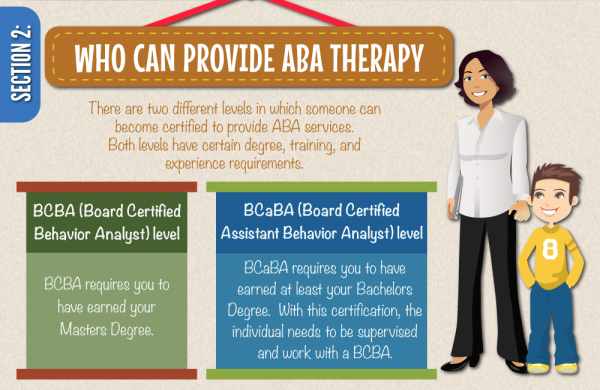
There are different processes to become a certified Applied Behavior Analysis provider. If you as the parent are not certified or would like to learn more, often school directed toward those on the Autism Spectrum Disorder have trained individual’s and can get you more information.

autism therapy

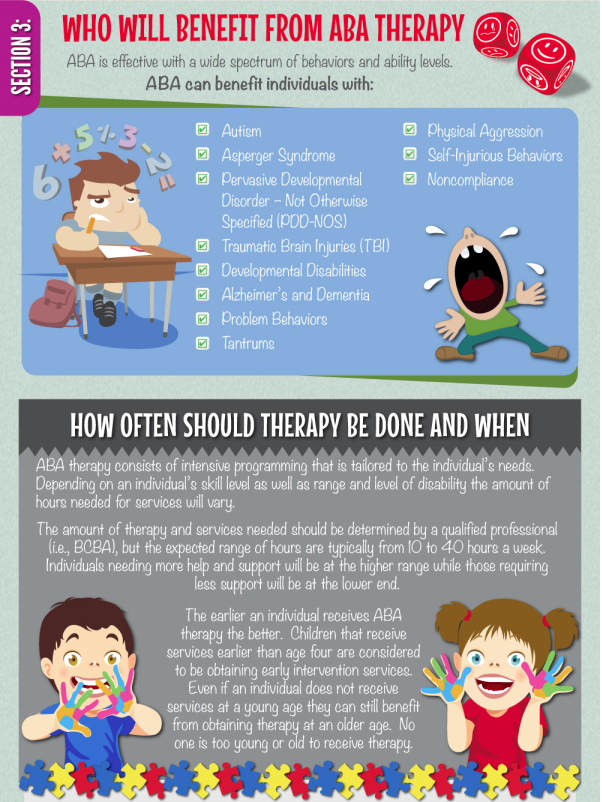
Although ABA is often thought of as an Autism focused therapy, it can be helpful for a wide spectrum of disorders. These include but aren’t limited to: Autism, Asperger Syndrome, PDD, Traumatic Brain Injury, Problem Behaviors, Developmental Disabilities, Tantrums, Non-compliance, Physical Aggression, Dementia, Self-Injurious Behaviors, and Alzheimer’s. Since the whole Applied Behavior Anaylsis approach is based off of creating an individualized plan to reach the individual’s goals, it really can be used on anyone. The amount of time and effort put into the approach can often effect the outcome of improvement seen in the individual. Meaning the more time you spend with quality ABA therapy the better likelihood of good results.

autism spectrum disorders

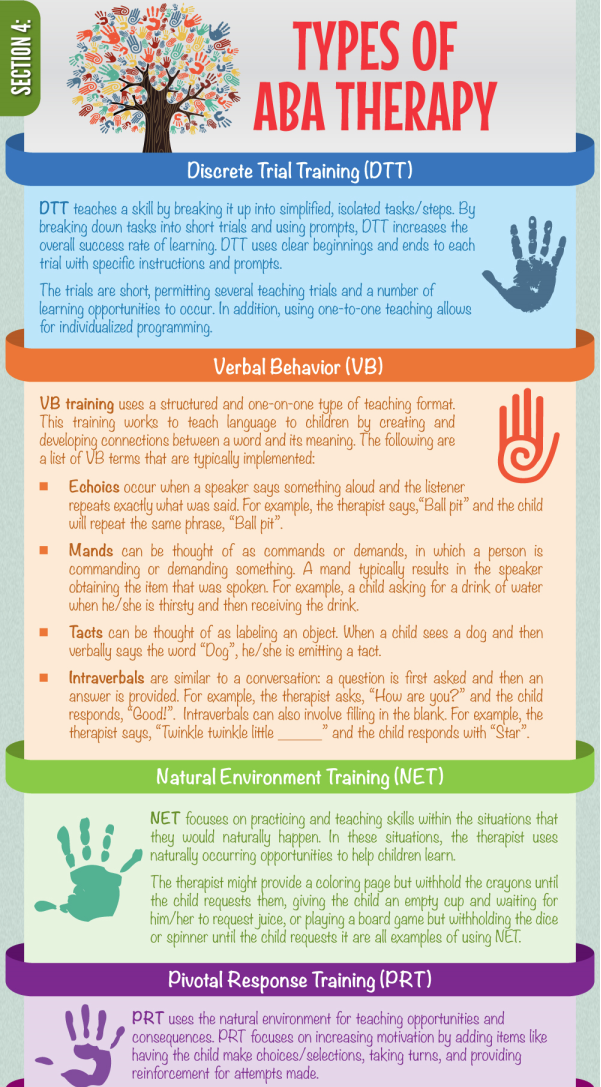
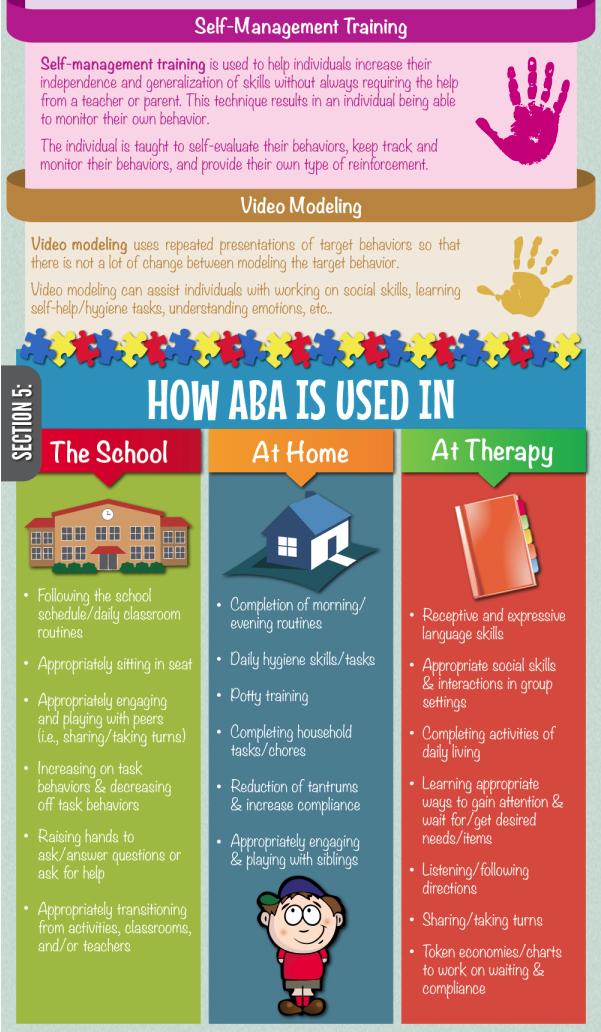
There is a wide range of approaches or types of ABA therapies used to meet a variety of goals. These are some of those included. It is important to use what works best for the child. Many children may need more than one, but with each individual case there are many variables to consider.

autism spectrum disorders

Related Articles to ‘Autism: ABA Therapy, Applied Behavior Analysis, Getting the Facts’

Autism Warning Signs: Early Detection

Autism: Awareness is the Key to Intervention

The following infographic is brought to you from…

autism spectrum disorders