The Importance of Being a Father

The Importance of Being a Father

I recently read this article which provoked some thinking on what wonderful father’s my life has been blessed with. Thought I would pass along the read: Why Father’s Really Matter. It states some interesting facts on the importance of being a father and the life longs, generational impacts this may have, like:

The Importance of Being a Father

  • Environmental toxins leave even more florid traces on grandchildren and great-grandchildren
  • When the study appeared in 2002, a British geneticist published an essay speculating that how much a boy ate in pre-puberty could permanently reprogram the epigenetic switches that would govern the manufacture of sperm a few years later.
  • Effects of betel nut consumption by a male may extend to his grandchildren
  • Fathers’ trauma communicates itself to their offspring
  • Children of men older than 50 were 2.2 times as likely to have autism as children of 29-year-olds
  • By the time the men passed 55, the risk doubled to 4.4 times that of 29-year-olds
  • What doctors should probably add is that the health of unborn children can be affected by what and how much men eat; the toxins they absorb; the traumas they endure; their poverty or powerlessness; and their age at the time of conception
Related Articles to ‘The Importance of Being a Father

Autism and Obesity: the Links in Pregnancy

Down Syndrome: A Bio by the Father of a Child Effected


alcohol and drug abuse

Alcohol and Drug Abuse: Know the Facts

Alcohol and Drug Abuse are ongoing issues, especially for those with emotional disabilities. When mental health issues and substances collide, it can result in death. It is important to educate ourselves on these issues, so that we can recognize the warning signs and get help when needed. September is National Alcohol and Drug Recovery Month, and in honor of this important month, here are some surprising statistics I recently read about Alcohol and Drug Abuse:

  • More than 3 million people use Cocaine
  • Nearly half of all drug-related emergency room visits involve cocaine abuse
  • More than 10 million people abuse prescription medication
  • More than 40 people per day drive from drunk driving accidents, approximately 16,000 people per year
  • Alcohol is the leading risk factor in deaths of males 15-59
  • Alcohol dependence and abuse costs $220 billion per year
  • 17.6 million people, or about 1 in 12 adults, abuse alcohol or are alcohol dependent

alcohol and drug abuse

According to National Survey on Drug Use and Health, in 2009, 51.9% of Americans age 12 and older had used alcohol at least once in the 30 days prior to being surveyed:

  • 23.7% had binged (5+ drinks within 2 hours)
  • 6.8% drank heavily (5+ drinks on 5+ occasions)
  • In the 12-17 age range, 14.7% had consumed at least one drink in the 30 days prior to being surveyed, 8.8% had binged; and 2.1% drank heavily.

The NIDA-funded 2010 Monitoring the Future Study showed that:

  • 13.8% of 8th graders, 28.9% of 10th graders, and 41.2% of 12th graders had consumed at least one drink in the 30 days prior to being surveyed
  • 5.0% of 8th graders, 14.7% of 10th graders, and 26.8% of 12th graders had been drunk.
Related Articles to ‘Alcohol and Drug Abuse: Know the Facts’

Aspects of Behavioral Disorders

Emotional and Behavioral Disorders: Definitions and Challenges


car seat guidelines

Car Seat Guidelines: Tips for Keeping Your Child Safe

Tips to ensure you are using a child car seat correctly

car seat guidelines

Car seats can be difficult to put in and can easily cause confusion. Here are some important car seat guidelines for keeping your little one safe:

  1. Never put an infant in the front seat of a vehicle with a passenger air bag.
  2. Route harness straps in lower slots at or below shoulder level.
  3. Keep harness straps snug and fasten the clip at armpit level.
  4. Make sure the straps lie flat and are not twisted.
  5. Dress your baby in clothes that allow the straps to go between the legs. Adjust the straps to allow for the thickness of your child’s clothes. Do not use bulky clothes that could increase slack in a crash.
  6. To keep your newborn from slouching, pad the sides of the seat and between the child’s legs with rolled up diapers or receiving blankets.
  7. Put the car seat carrying handle down when in the car.
  8. Infants must ride in the back seat facing the rear of the car. This offers the best protection for your infant’s neck.
  9. Recline the rear-facing seat at a 45-degree angle. If your child’s head flops forward, the seat may not have reclined enough. Tilt the seat back until it is level by wedging firm padding such as a rolled towel, under the front of the base of the seat.
  10. All new car seats are now required to come equipped with top tether straps. A tether strap is a belt that is attached to the car seat and bolted to the window ledge or the floor of the car. They give extra protection and keep the car seat from being thrown forward in a crash. Tether kits are also available for most older car seats. Check with the manufacturer to find out how to get a top tether for your seat. Install it according to instructions. The tether strap may help make some seats that are difficult to install fit more tightly.
Related Articles to ‘Car Seat Guidelines: Tips for Keeping Your Child Safe’

Find the Right Car Seat: Keep Your Child Safe

Fun Free Toddler Apps: for iPhones and iPads

teaching children about differences

Teaching Children About Differences and Disabilities

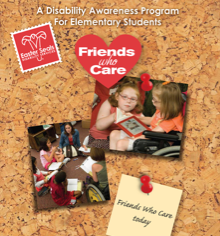
All individual’s are different, and although it seems inevitable kids will learn about children who are different, it is essential to teach them how to respond correctly. Now most of this is taught through the parents reaction, but when working as a teacher, there is a unique chance for also developing an accepting individual. These early experiences in life carve the way to adults with good hearts. It is important to help the children understand what makes us different and celebrate these differences. It is a proactive way to stop bullying and spread some love. Teaching children about differences is essential in helping to build a compassionate adult who lives wisely with tolerance and acceptance. Here is a unique reference I found, if you want to help your children or students learn about these differences: Friends Who Care

teaching children about differences

According to there own site,

FRIENDS WHO CARE® is designed to help children better understand what it means and how it feels to be a young person with a disability. This educational program gives students the opportunity to learn what is involved when someone has a disability and how they adapt to live life, go to school, or work as independently as possible.

The goals of the program are simple: to encourage typically developing children to accept their peers with disabilities as people first and also to find ways to include everyone in school and after-school activities.


Related Articles to ‘Teaching Children About Differences’

Word Recognition: A Guide to Help Children Read

Art Therapy Working With Emotional Disabilities


self advocacy

Self Advocacy: What It Is and How to Teach It

What is self advocacy?

Developing self-knowledge is the first step in self advocacy skills. Learning about one’s self involves the identification of learning styles, strengths and weakness, interests, and preferences. For students with mild disabilities, developing an awareness of the accommodations they need will help them ask for necessary accommodations on a job and in post-secondary education. Students can also help identify alternative ways they can learn. Self advocacy refers to:
an individual’s ability to effectively communicate, convey, negotiate or assert his or her own interests, desires, needs, and rights. It involves making informed decisions and taking responsibility for those decisions.
Self-advocacy is not a new concept in disability services. Enabling and empowering students to direct their own lives has been an underpinning of federal legislation for some time. For example, the Workforce Investment Act of 1998, Title 1, Vocational Rehabilitation Program, describes the philosophy of independent living as including consumer control, peer support, self-help, self-determination, equal access, and individual and system advocacy, in order to maximize the leadership empowerment, independence, and productivity of persons with disabilities.

self advocacy

How can we improve self advocacy?

There are many components in developing self advocacy skills in young adults who are engaged in the transition process. Helping the student to identify future goals or desired outcomes in transition planning areas is a good place to begin. Self-awareness (self-knowledge) is critical for the student in determining the direction that transition planning will take.

These strategies to help individuals with disabilities develop self advocacy skills:

  • Promote the student as a self-advocate
  • Encourage the student to be active in the IEP process and other decision-making situations. Assist the student in compiling and developing an exit file. This file should include the last IEP, a transition plan, documentation of disability, recent test scores and assessment summaries, a list of strengths and areas of need, a list of home or work accommodations needed, a summary of learning style, letters of recommendation, and the telephone numbers of service providers. This file empowers the student and encourages self-knowledge. Self advocacy issues and lessons will be most effective if they are integrated daily.
  • Respond to students who self-advocate appropriately
  • Listen to the problem and ask the student for input on possible accommodations or modifications that he or she may need. Talk with the student about possible solutions, discussing the positive and negative sides. A person who self-advocates should not feel alone. Good self-advocates know how to ask questions and get help from other people. They do not let other people do everything for them or tell them what to do. Self-advocates are assertive. Assertive people tell others what they want and need, but they do not demand they respect the rights and feelings of other people. They talk over their ideas with other people. They ask questions for guidance, and then make up their own minds after reviewing the information. They may have strong feelings, but they try to be objective when making their decisions.
  • Identify strategies for teaching self advocacy
  • Students need opportunities to practice newly acquired self-advocacy skills.
  • Students apply self advocacy skills by calling and requesting information about a service they need for transition from high school. Students can prepare to visit an adult service provider by compiling a list of questions to ask and requests for services.
  • Identify examples of self-advocacy objectives on an IEP

Teachers may wish to have students’ role play various situations, in which they can practice skills such as the following:

  • Setting up a class schedule
  • Moving out of the home
  • Asking for accommodations needed for a course
  • Meeting with a rehabilitation counselor or social service caseworker
  • Meeting with a medical provider
  • Working with a personal care attendant
  • Interviewing for a job
  • Making choices in an IEP meeting

Following are some examples of objectives for an IEP that would promote development of self advocacy. Students will:

  • State their rights as mandate under the Individuals with Disabilities Act Amendments of 1997, P.L. 105-17.
  • State their rights as mandated under Title I of the Workforce Investment Act of 1998 (Vocational rehabilitation) and Americans with Disabilities Act (ADA).
  • Be able to access information from the support service staff of the post secondary school in which they have expressed an interest
  • State the type of information necessary to self advocate
  • Define the terms assertive, passive, and aggressive
  • Identify assertive, passive, and aggressive behavior in written scenarios
  • State examples of their own assertive, passive, and aggressive behaviors
  • Respond assertively in a given situation

Students need specific self advocacy skills for job interviews. Here are a few examples:

  • Be prepared: Complete an application and a resume.
  • Be alert: Greet interviewer, establish eye contact, and sit up straight.
  • Be an interested listener: Show enthusiasm.
  • Express yourself clearly: Avoid slang and negative comments.
  • Tell about yourself: Describe your strengths, goals, and past experiences.
  • Ask questions: Show interest and energy.
  • Describe what you have to offer or the types of work you want to do: Demonstrate self-confidence and enthusiasm.
  • These are just a few examples of the techniques educators and parents can use to ensure that students have the self-advocacy skills needed to make the transition from school to work. It is important that self-advocacy be recognized as a critical component of transition if the ultimate goal of transition-independence-is to be achieved.