Intellectual Disability and the Adulthood Transition

Intellectual Disability and the Adulthood Transition

Each person with a disability is different.  They merely suffer from a common disability, such as an intellectual disability, but in fact are they themselves individuals with their own wants and desires.  It is important for us as teachers, caseworkers, families, and other providers to support them in defining their own life.  It is important to prepare them for the steps they take and then support them throughout their adventure. Many factors contribute to the success of Adults with an intellectual disability.  They include:

  • self-determination
  • community resources
  • social adaptation

Intellectual Disability and the Adulthood Transition

As they go through school and therapy, they are often preparing for life after school.  Once they get to the point of adult standing, they need to be able to make decisions, inquire on needs, and search for resources.   They need to be able to keep appointments, go to the doctors, take medicine, get groceries, keep hygiene, and live through daily transitions.  If they are unable to do any of these things, they need to ask for the resources and/or get the appropriate services.
It is important for these individuals to receive support through verbal confirmation and physical resources during their high school to young adult transition and throughout their adult life.  The community can provide ongoing services for those that need continued therapies.  They can also provide accessible resources, such as job placement, social opportunities, and reference material for those with mental retardation.

As a community resource, it is important to find what is appropriate for the individual as each is different. It may be helpful to have specific counselors in their last semester at school to go through their options with them.  They might also need ongoing caseworkers that check-in on them yearly to make sure they are getting the services they desire.  These caseworkers can also help the individuals in service to find job opportunities, social events, and answers to their other questions.  They can give them referrals to the organizations that those in service have not been able to find for themselves.  Some individuals with mental retardation may require supervision for some activities, like cooking, so ongoing respite may be necessary.  The ongoing respite can also help those individuals to feel more independent, as they can live on their own terms with workers that help when necessary.  This resource along with the other one’s desired by the person in service can help the individual with mental retardation find success in living a fulfilling life.

Related Articles to ‘Intellectual Disability and the Adulthood Transition’

Intellectual Disability: Decisions of Adulthood Transition

Intellectual Disability and Defining Intelligence

qualifying for special education

Qualifying for Special Education: What to Know

When it seems like your child or student really needs some extra help, you may look at the possibility of qualifying for special education. It is a process. Here are some of the steps involved.

qualifying for special education

PREREFERRAL

Prereferral generally starts when a teacher in a general education classroom identifies a student as having difficulties with the curriculum/pace of the class.  The teacher may call upon others like, the school psychologist, other special/general education teachers, school nurses, guidance counselors, or other related service providers, to help them in identifying the child’s problems and see if further evaluation is necessary.

REFERRAL

The referral normally takes place when a teacher seeks further assistance in helping the child get an appropriate education.  It includes a formal, written request for the child to obtain a full and formal non-discriminatory evaluation.

ASSESSMENT

The assessment normally includes background information, cultural questions, language proficiency, learning style, and motivational influences.  There are other guidelines sets up to protect the child’s rights.  For example, there must be more than one test and a review of all information provided about the child.

ELIGIBILITY

Eligibility is normally defined by a percentage of a delay.  Children can find eligibility for different services that are appropriate for their delay.  Some services available to them may be speech therapy, occupational therapy, physical therapy, resource classrooms, special education classrooms, and other school or federally funded programs.

INDIVIDUALIZED EDUCATION PROGRAM (IEP)

Once eligibility is clarified, an IEP will be put in place.  The IEP is a joint effort of the child’s family, the child, a regular education teacher, a special education teacher, and other providers/individuals that the educators/family feels are important.  The IEP must include statements about the child’s present levels, measurable goals, providers/services, hoe the child will obtain goals, any inclusion for the child, how the child will or will not take assessments for student achievement, and the date that services will be provided.

LEAST RESTRICTIVE ENVIRONMENT (LRE)

The Least Restrictive Environment is a rule set up to protect a child’s rights to be educated in a classroom with students that do not have disabilities to the maximum extent, so that those with disabilities experience inclusion in their education.


Related Articles to ‘Qualifying for Special Education’

Special Education System: An Introduction

ADHD and ADD: How to Help a Child Effected

autism research

Autism Research: Finding the Cause and Cure

Autism research has come a long way, but not all of the research seems to be widely known. I recently read this great article on Immune Disorders and Autism. It states these little known facts that research has found:

autism research

  • Autism can be linked to pregnancy
  • In 1/3 of cases, it is linked to Immune Dysregulation
  • If a mother in the first trimester gets hospitalized for a viral infection, it can triple the odds
  • If a mother gets a bacterial infection in the second trimester, it can increase the odds by 40%
  • Inflammatory diseases in general have increased significantly in the past 60 years- As a group, they include asthma, now estimated to affect 1 in 10 children (at least double the prevalence of 1980) and autoimmune disorders, which afflict 1 in 20
  • A mother’s rheumatoid arthritis can elevate a child’s risk of autism by 80 percent
  • A mother’s Celiac disease increased the odds of autism 350 percent
  • Mothers of autistic children often have unique antibodies that bind to fetal brain proteins
  • A mother’s diagnosis of asthma or allergies during the second trimester of pregnancy increases her child’s risk of autism. So does metabolic syndrome, a disorder associated with insulin resistance, obesity and, crucially,low-grade inflammation. The theme here is maternal immune dysregulation
  • In population rife with parasites and acute infections, autism can be nearly nonexistent. Explaining why it seems to be growing in our civilized society
  • Asthma and Autism are more common in urban areas than rural; firstborns seem to be at greater risk; they disproportionately afflict young boys
  • Probiotics might help
  • More Research needs to be done
  • Please read the full article for more information
Related Articles to ‘Autism Research: Finding the Cause’

Autism and Obesity: the Links in Pregnancy

Autism Warning Signs: Early Detection

The Importance of Being a Father

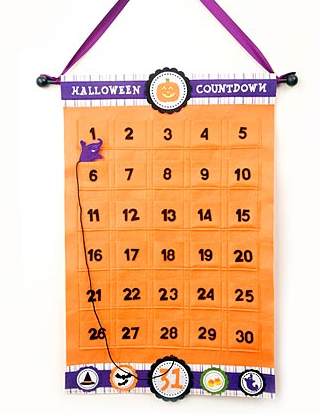
Halloween Advent Calendar: How and Why to Make One

Halloween Advent Calendars can provide numerous entertainment and education. Thy can help children learn: how to count down, number recognition, and patience. The one we made has two sides: an odd and evens.

When we got out the decorations and my toddler said “yay, it’s FINALLY Halloween,”  I thought the holidays could be long this year. Instead we are trying to learn pacing our selves with some basic math concepts and Halloween is a great reinforcement. Below is the one we made. It is done on a budget without sowing. (I just got done with curtains and couldn’t bring myself to make something nicer)

Halloween Advent Calendar

Here’s what we did to make a Halloween advent calendar:

  • Bought a $2 wreath and some ribbon from the craft store
  • Let my child paint away
  • Filled in the areas they did not paint
  • Attached the ribbon
  • Added clips and craft scraps we had around the house to complete the functionality

Here are some other great Halloween Advent Calendars:


RELATED ARTICLES TO ‘Halloween Advent Calendar: How and Why to Make One’:

Reading Comprehension: Helping Kids Succeed

Fun Free Toddler Apps: for iPhones and iPads

reading comprehension

Reading Comprehension: Helping Kids Succeed

Reading comprehension is the skill of decoding text and then remembering what was read.  This can help children to find success in acquiring knowledge and eventually lead to successful test taking and test preparation.  It is an important skill that can be mastered when broken down for the child. They may need extra help along the way in order to achieve success but constant practice is the key toward finding success. Below are some additional ideas to help your child succeed in reading comprehension.

reading comprehension

The following 8 tips can be used to help children become successful in reading comprehension:

  • Start Young: It is never to early to practice the great skills of reading. Whether you are reading with the child or they are reading to themselves
  • Audio Books: Listen to stories and then have the student become the illustrator and make the book
  • Summary:  Break larger reading into smaller portions where the student can ask himself or herself what was this about.  For example, this can be applied to early readers and short sentences to paraphrase reflectively and make sense of the larger book
  • Compare/Contrast:  Students can reflect on what they have read by looking at what it is like from their prior knowledge and how it is different.  They may also be comparing facts in the sentence or characters in the book
  • Clue Words: Teachers and/or parents can help students prepare for what they are reading by highlighting and defining words for them to find in the text.  This can help students to greater understand what they are reading
  • Variety of input:  Students can practice reading to themselves, in small groups, or as a class.  This can help students to listen and read, and it can also help with the next point.
  • Discussion:  After reading, children can discuss with each other or with you what was read and how it applies to the topic.
  • Graphic Organizer:  Students can take what they read and apply it to note type format.  This multi task experience can help with retention, understanding, and be used later as a reference.


Related Articles to ‘Reading Comprehension: Helping Kids Succeed’

Practicing Spelling Words: Fun and Creative Ways

Early Literacy Skills Builder: A Start for Success