reading facts

Book Facts: Reading is a Gateway to so Much More

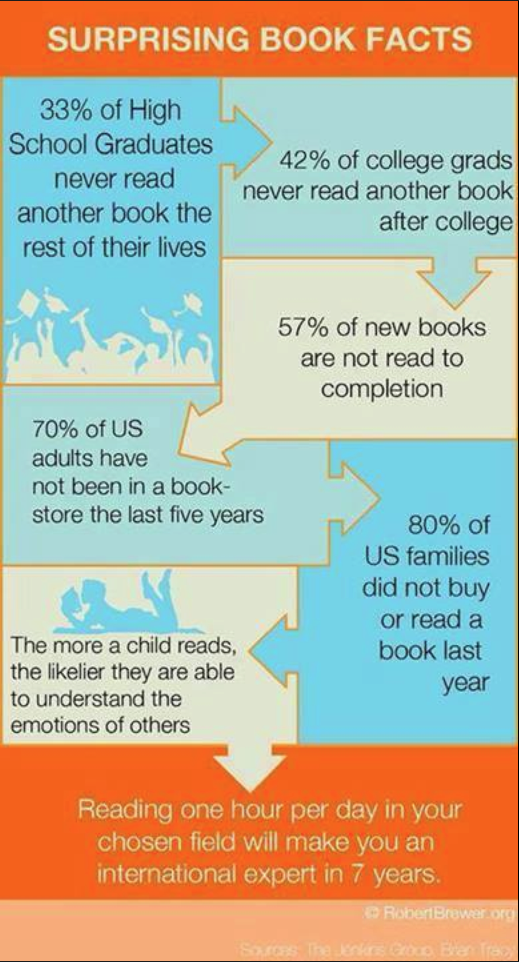
I found this great info graphic about reading, but what is truly interesting is thinking about it in application.

reading facts


On the guy’s website, he states that the last box is not research based…so just an opinion.

High school graduation in the US tend to be around 75%. According to the Washington post, only about 27% of college graduates have a job related to their major. Perhaps if we changed the numbers of books in the average American home and started placing value in learning at a younger age, both of these rates could jump and the whole reading info-graphic would change. If children became more aware of others emotions and even more connected to themselves, they could easily find success in school. Reading also increases imagination and self awareness, which can lead to creating and making dreams come true.  Education starts in the home, so even in our crazy schedules try to find time to read with your kids daily. If you can’t afford books, try a library or second hand. Literacy can lead to so much more in a child’s future.

Related Article to ‘Book Facts: Reading is a Gateway to so Much More’

Reading Books with Kids: Phonological Awareness

Reading Comprehension: Helping Kids Succeed

Early Literacy Skills Builder: A Start for Success

Developmental Milestones

Developmental Milestones: Prenatal to Three Years Old

As a child develops, there are many typical steps for parents and professionals to look for as age appropriate guidelines in their development.

Prenatal Development

Weeks 1-8: develop heart, upper limbs, lower limbs, and start to develop many other organs
Week 9-16: develop palate and ears, continue to develop other organs
Week 17-38: develop central nervous system, eyes, teeth, and external genitalia

Risks During Pregnancy

Week 1-2: Prenatal death
Week 3-7: Major morphological abnormality
Week 8-38: Functional defects and minor morphological abnormality

At Birth

Heart Rate: Should be over 100 beats per minute
Skin Color: Should be completely pink
Reflex Responses: Should be vigorously crying
Respiration: Should be good, crying
Muscle Tone: Should have active movement
Skills Developed within the First 6 Months

Developmental Milestones

Skills Developed within the First 6 Months

  • Turn head when name is called
  • Play social games, such as peek-a-boo
  • Moves head actively in supported sit
  • Reaches and grasps objects
  • Respond to sound with sound
  • Smile back at you

Skills Developed by the End of 2 Years

  • Use 2-4 word phrases
  • Follows simple directions
  • Begin make-believe play
  • Become more excited about other children
  • Draw circles and vertical strokes
  • Walk up and downstairs with one hand held
  • Identify six body parts
  • Remove shoes and starting to help put on shoes

Skills Developed by the End of 3 Years (36 months)

  • Show affection for playmates
  • Use 4-5 word phrases
  • Imitate adults and playmates, run when other children run
  • Play more complex make-believe
  • Use expressive vocabulary 300-1,000 words
  • Sort animals, shapes, and colors
  • Climbs jungle gyms and ladders
  • Shows independence

Following the Developmental Milestones

These steps in development, as well as, those that follow in the years after are important. The developmental milestones are a guide in helping us understand if a child is staying on track developmentally. As children demonstrate these skills, they also demonstrate their cognitive and physical strengths. If you suspect that a child is falling behind, contact your local developmental pediatrician for an assessment that can provide more insight into the delay and help to rule out specific disabilities.

Articles Related to ‘Developmental Milestones: Prenatal to Three Years Old’

3 Year Old Milestones: Free Developmental Guide

Great Developmental Milestones Quick Guide

Child Development Milestones: the First Five Years
physical disabilities

Physical Disabilities: Mannequins and Models

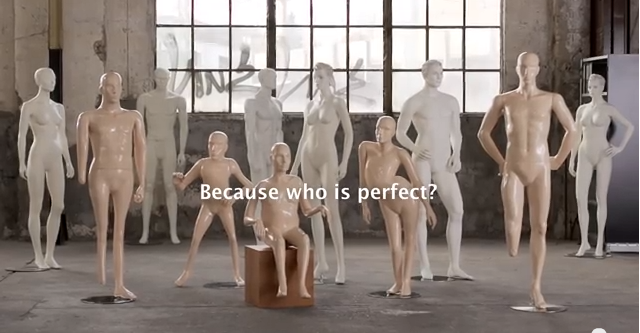
Here is a unique video about how all individuals are beautiful. It challenges people to rethink what ‘perfect’ really is and explore redefining our own definitions. An organization took on building mannequins based on real people with physical disabilities. These mannequins represent so much more than just what they are. You can see the individuals they represent in the video seem to find great satisfaction and clarity within their own mannequins. Once the mannequins are in the retail windows, you can see people who both enjoy them and some that become uncomfortable with them. There are some professional models emerging into the markets who also have physical disabilities and some stores are taking on the challenge of using mannequins that represent their wider market shopping base. All in an effort to find the beauty in differences and enjoy each individual’s uniqueness. This is a great example to not only the adults involved but also children who growing up with physical disabilities. It shows that they are appreciated, and they too are a vital part of our society.

Article Related to ‘Physical Disabilities: Mannequins and Models’

Physical and Health Impairments: The Facts

Dance Therapy: Helping Individuals Connect

Intellectual Disability and the Adulthood Transition

early detection of autism

Early Detection of Autism: A Key to Changing the Future

Early detection of autism may be able to change the path of development of the child and alter the severity of effects from be predisposed to inheriting autism. Now as far as the actual cause of autism there are many beliefs, some of which I discuss in other posts, but early detection means early treatment. This can greatly impact the child’s future. Also  autistic minds are predisposed to be great at things some of us really struggle with…treatment does not mean the child will loose these great strengths.

early detection of autism

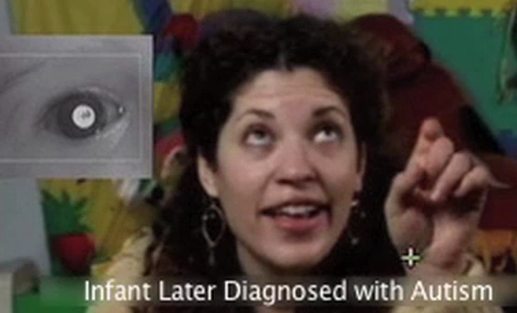
A new research article found that there is a quantitative link between how long a baby makes eye contact and the likelihood of being diagnosed with autism down the road. This does not occur directly at birth, but a couple months down the road. Meaning that detection of autism could occur at six months and treatment could begin soon after. So if you are a parent or caregiver and notice your child’s fascination of eye contact decreasing from 2 to 6 months instead of increasing, you might want to talk to your doctor about this. The severity of the change of interest in eye contact may also be related to the severity of autism, so please interact with your child regularly and notice their personal cues to you about how they are taking in their environment. Developmental Pediatrician are trained to know disabilities, and if you feel you want more information after speaking to your pediatrician, they could be of great value to you. Also please note that they are using eye detecting equipment (look at photo above), so if you do not catch this change do not feel guilty.

Early detection of autism comes down to of course more than just eye contact but that is an easier one to measure quantitatively. New head way also needs to be made in the treatment of younger children. Currently treatments are available for those after 18 months, but do not let that deter you from talking to your doctor. Treatment plans can take many months to get in place, so the sooner you head toward treatment the better off your child’s long term trajectory could be.

Find out more on Baby’s Gaze May Signal Autism

Article Related to ‘Early Detection of Autism: A Key to Changing the Future’

Autism Warning Signs: Early Detection

Autism Research: Finding the Cause and Cure

Autism: ABA Therapy, Applied Behavior Analysis, Getting the Facts


autism quotes

Autism Quotes: Seeing the World Differently

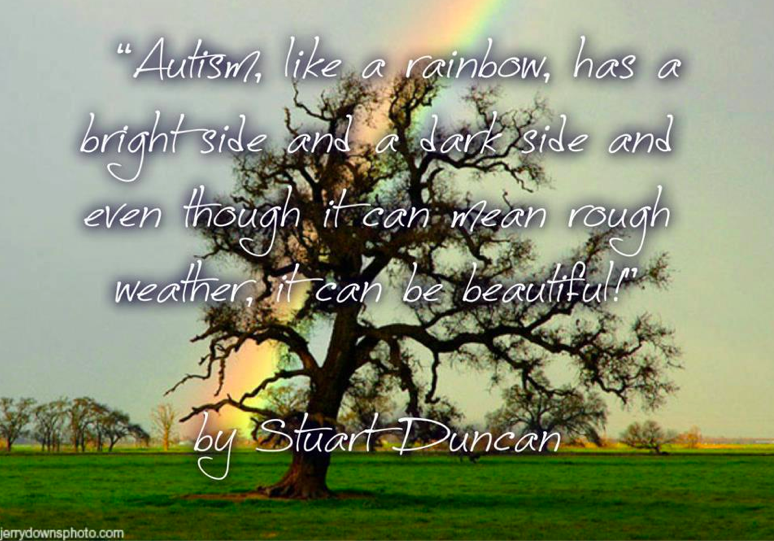
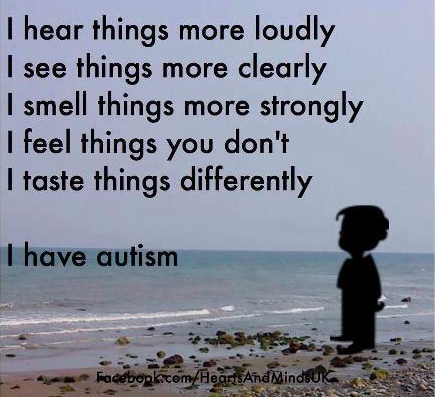
I ran across two wonderful autism quotes this week, so I thought I would share them. Hope you find them equally as enlightening. Although those with autism might see the world differently, their view can also be beautiful and what they can teach us can be amazing.

autism quote

autism quotes

Articles Related to ‘Autism Quotes: Seeing the World Differently’

Autism Warning Signs: Early Detection

Autism Research: Finding the Cause and Cure

Special Education Infographic for the United States